
In short: these Instagram ad examples all passed one filter. Each ad ran on Instagram for at least 30 days, so someone kept paying for it. Every example shows its run length and placements from Spytrend, and the carousel section uses the same filter.
Why run length is the filter here
Galleries of Instagram ads usually show what looks good. A good-looking design can still lose money in a week. Run length is a cheaper test of whether an ad worked. An advertiser who keeps an ad live for a month renews that budget every day of the month.
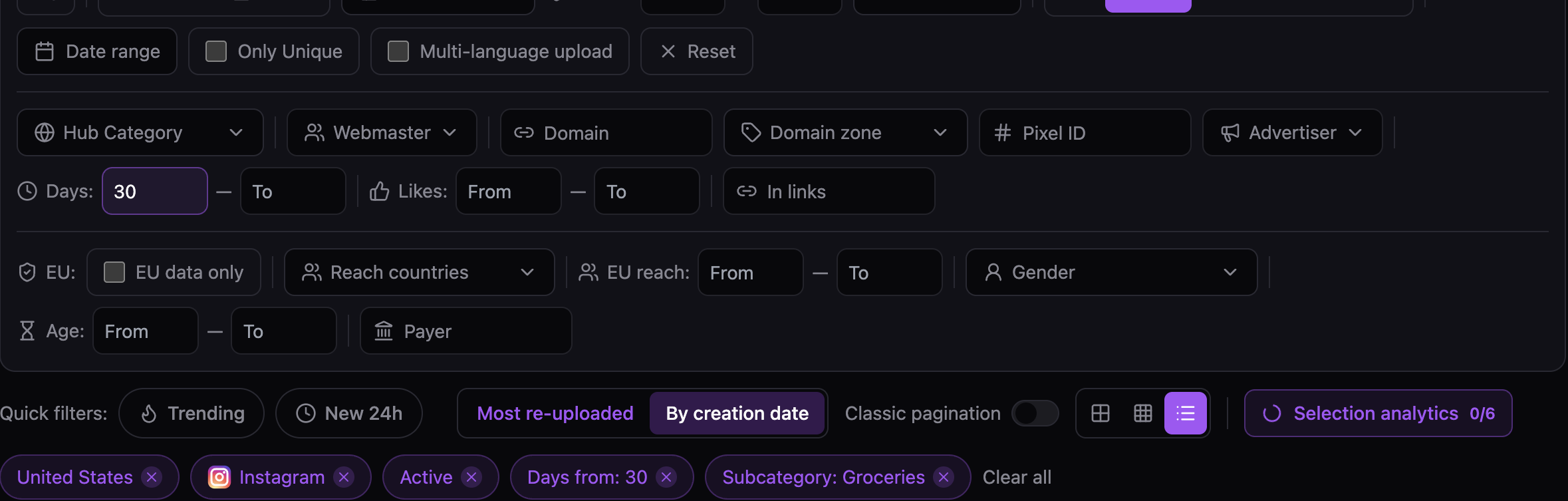
I picked every example in Spytrend with three conditions. The ad runs on Instagram, it's been active for 30 days or more, and it sits in a product, service or app category. I left out casino, health-claim and deepfake-style creatives even when their numbers qualified. All twenty are US ads.
One caution about placements. A Meta ad usually runs in several places at once, such as Facebook, Instagram and Messenger. The Instagram filter keeps ads that run on Instagram. It doesn't mean they run only there. Each caption lists the platforms from the ad's own card, and I call an ad "Instagram-only" only when Instagram is the single platform listed.
How to find Instagram ads that ran for 30 days
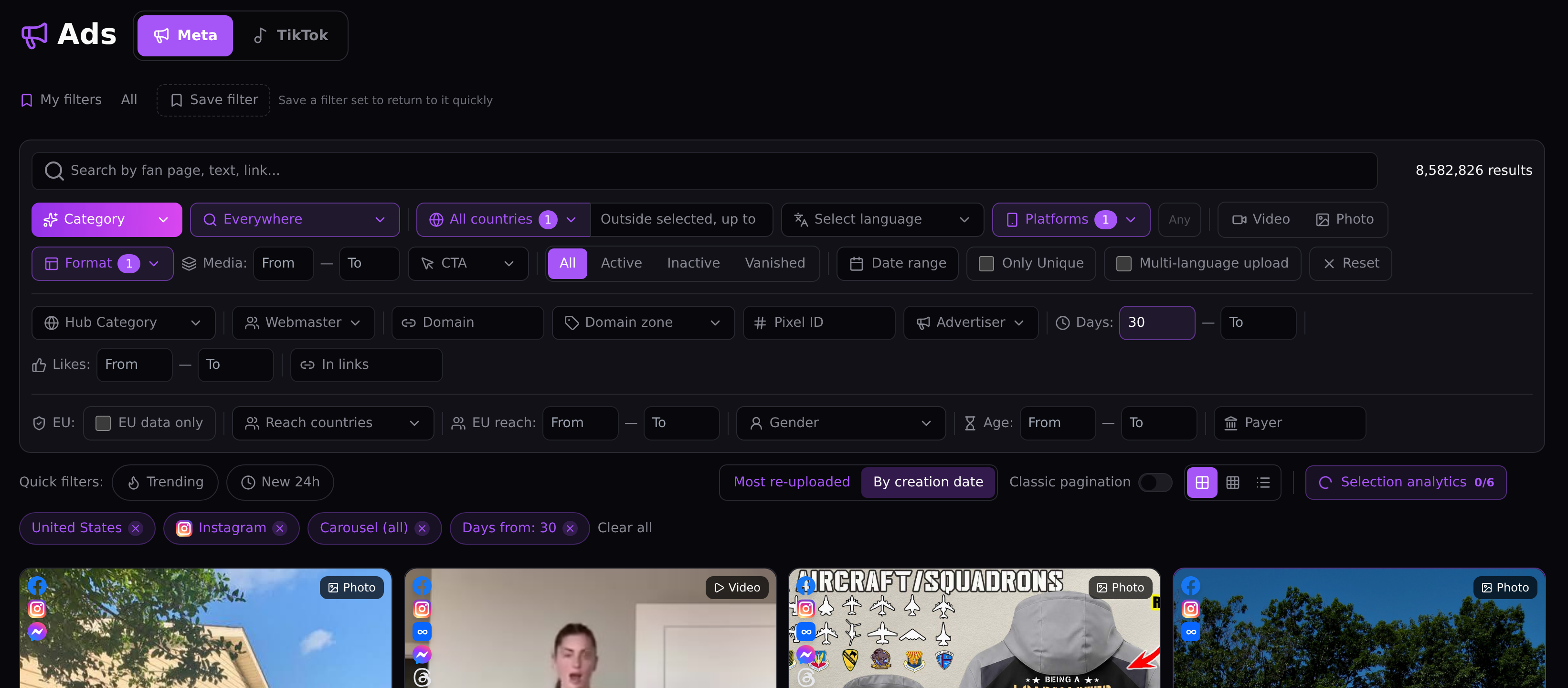
- Go to Ads and tick Instagram under Platforms, then pick the country you sell in.
- Raise the minimum days active to 30, so short tests drop out of the list.
- Narrow to one category; a mixed list hides which niche a long run belongs to.
- Open the ad. Its card shows how many days it has been showing, when it launched on Facebook, which placements it runs on and the webmaster behind it.
More on the Creatives section is in the Creatives write-up.
20 Instagram ad examples that stayed live 30+ days
Each example gives the run length and placements from the ad's card in Spytrend. Then comes one note on how the ad finds and holds its audience.
Groceries and food
1. A baking product with a two-line promise (39 days)
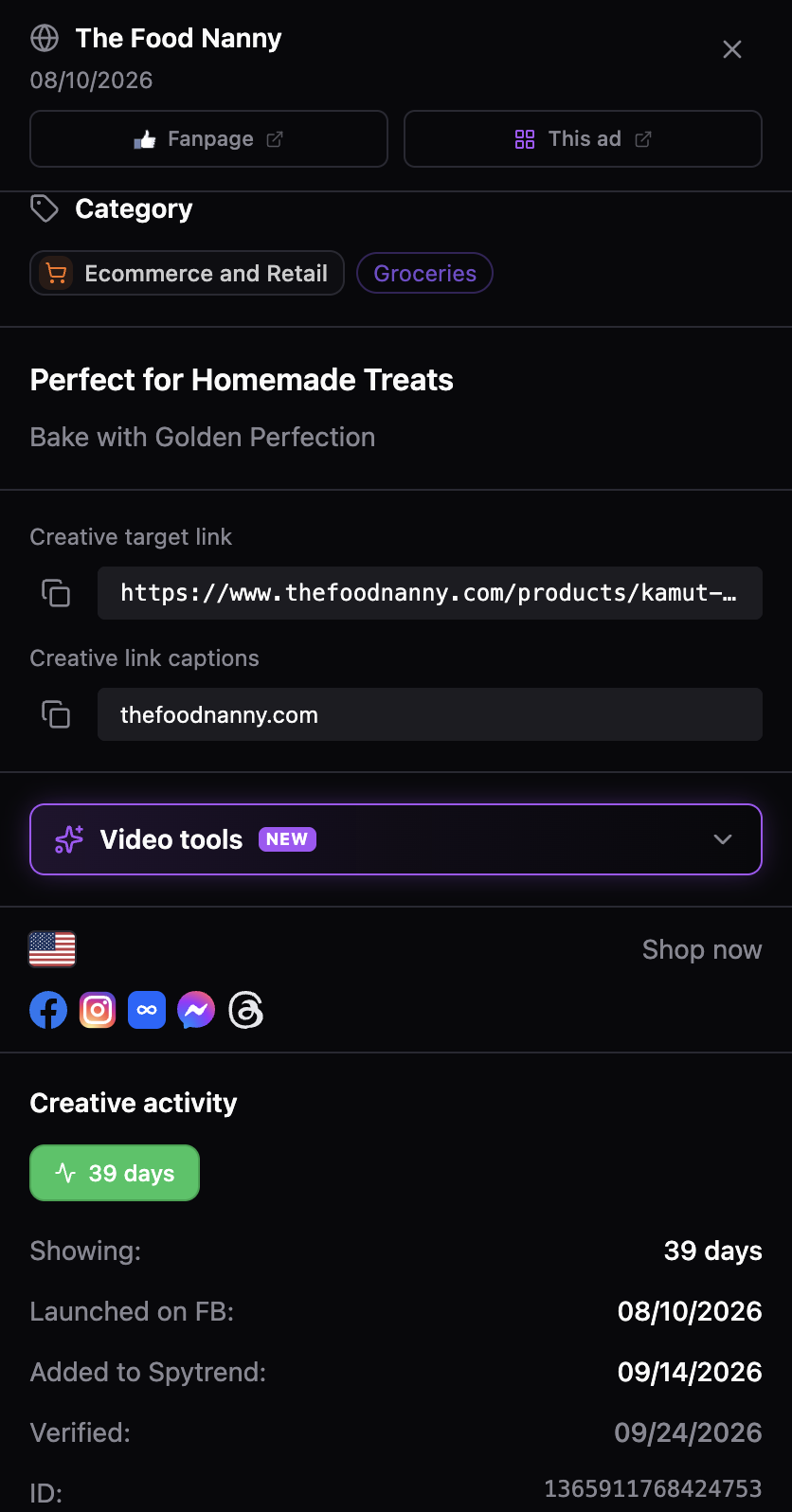
The Food Nanny keeps the copy to a headline and a sub-line: "Perfect for Homemade Treats. Bake with Golden Perfection." The click goes straight to a product page. It's one promise and a direct Shop now path, running on five Meta placements.
2. Grocery delivery sold as saved time (31 days)
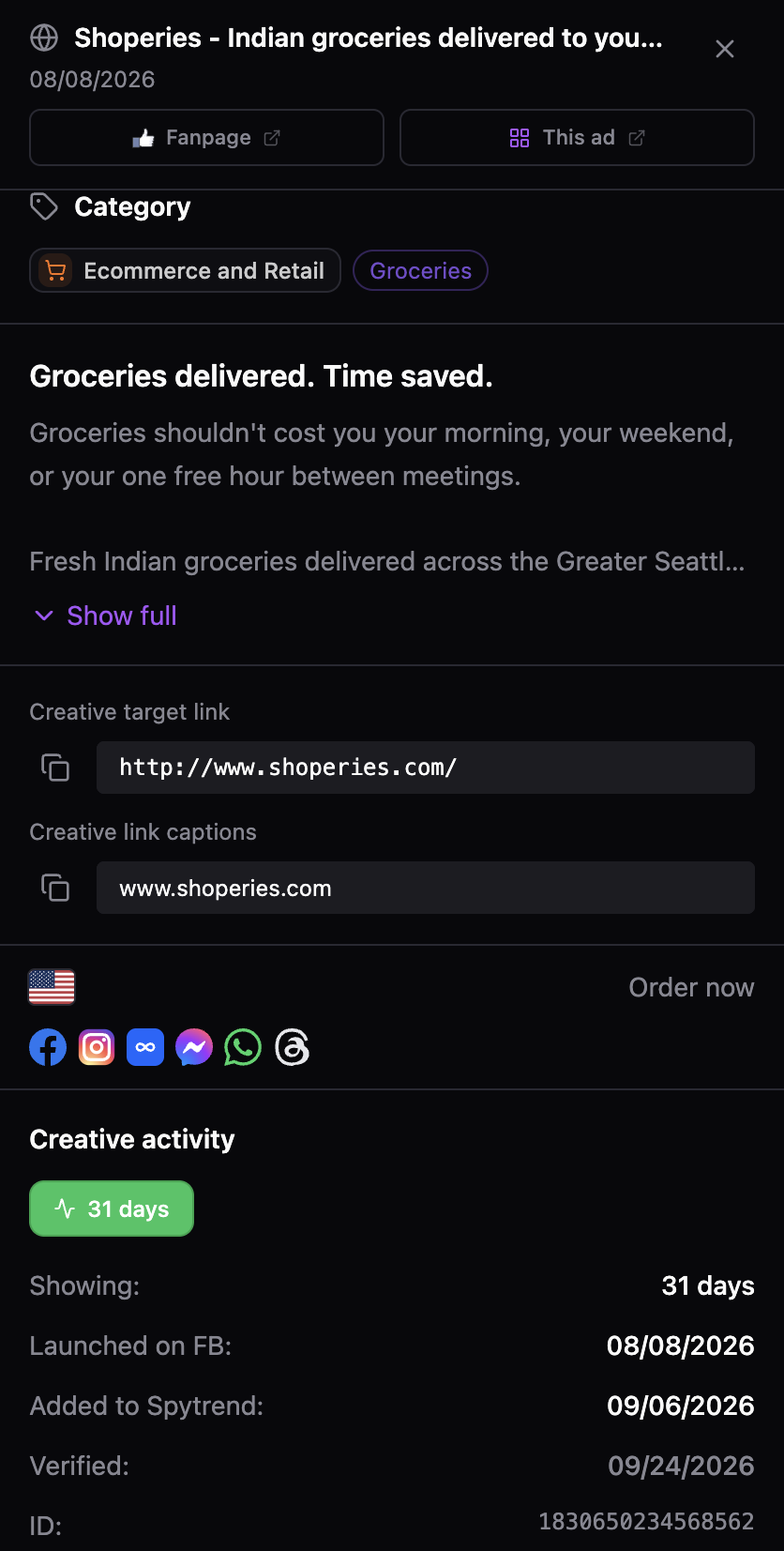
Shoperies opens with "Groceries delivered. Time saved." Then it names its market: fresh Indian groceries across Greater Seattle. The ad does its own targeting in the copy. It's also one of four here that run on WhatsApp.
3. A cookie ad written as a reaction (34 days)
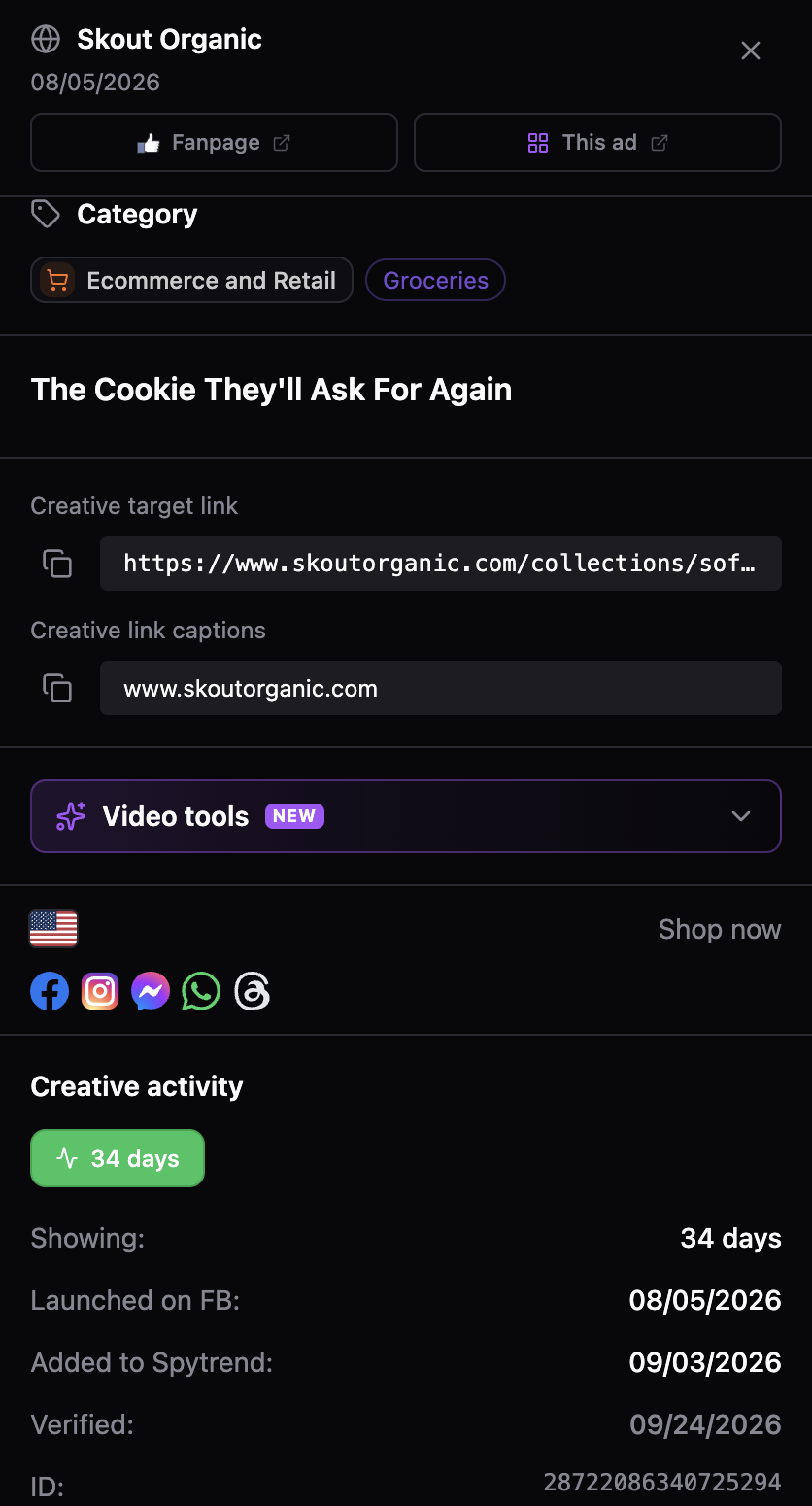
Skout Organic's headline is what a guest would say: "The Cookie They'll Ask For Again." The creative is a video. The line sells the moment of serving, and the ingredients stay in the background.
4. A Thai-language grocery shop in the US (38 days)
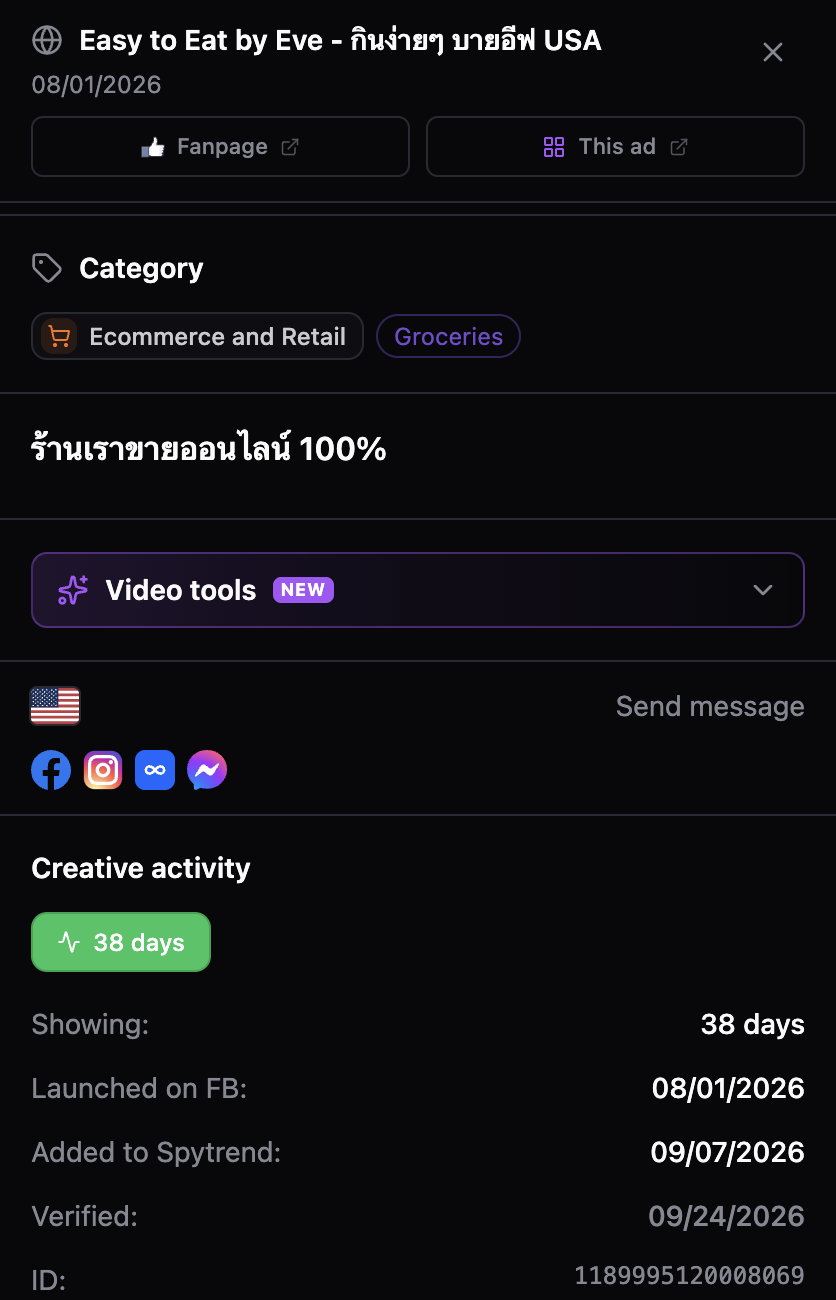
Easy to Eat by Eve writes the whole ad in Thai for a US audience. It asks for a message instead of a purchase. The language itself narrows the audience to the community the shop serves.
5. A neighborhood market's one-line intro (30 days)
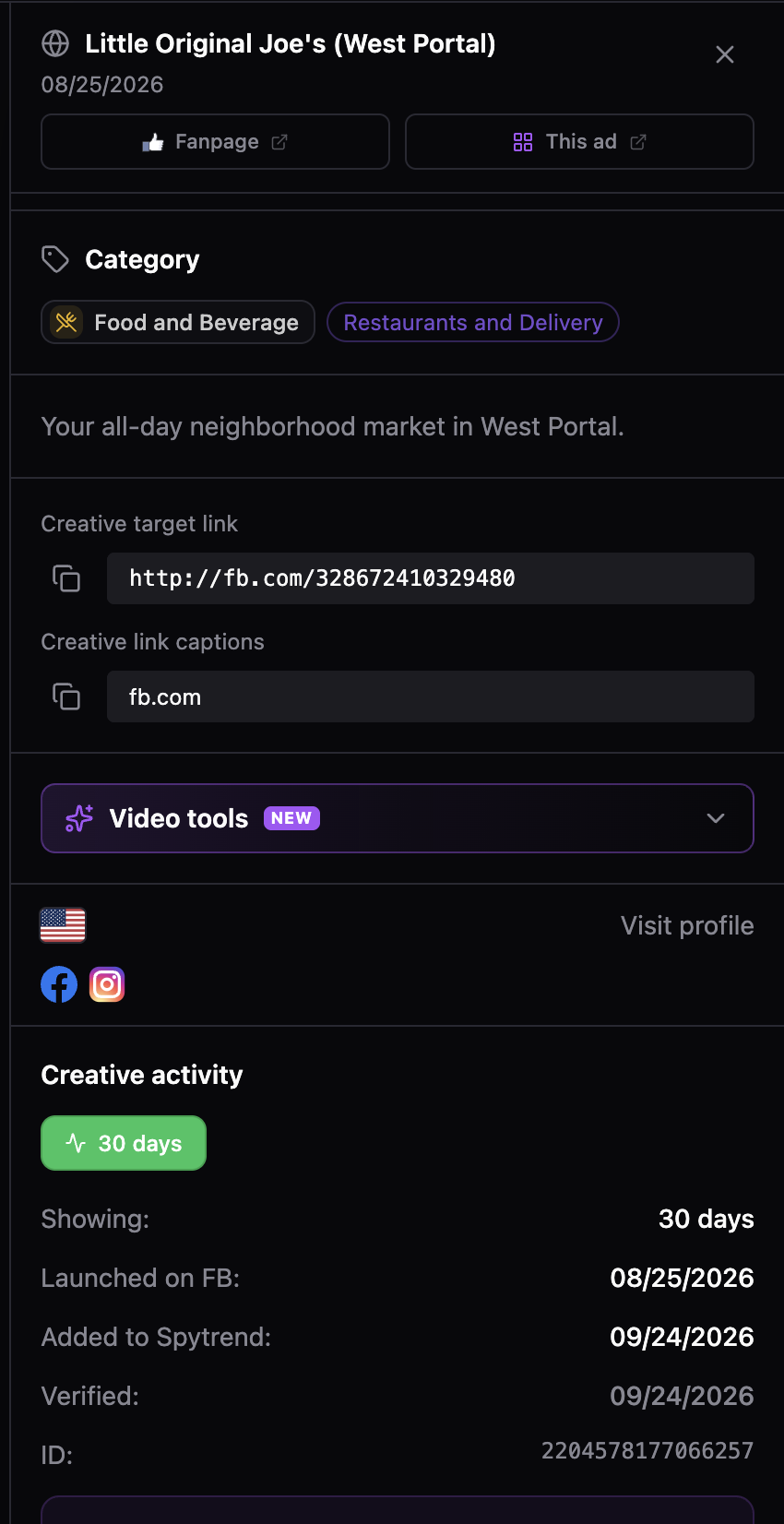
Little Original Joe's (West Portal) runs a single sentence: "Your all-day neighborhood market in West Portal." It sends people to its Facebook page instead of a website. For a local business, the ad works as a signpost.
Gaming
6. A coaching card with a free-trial headline (32 days)
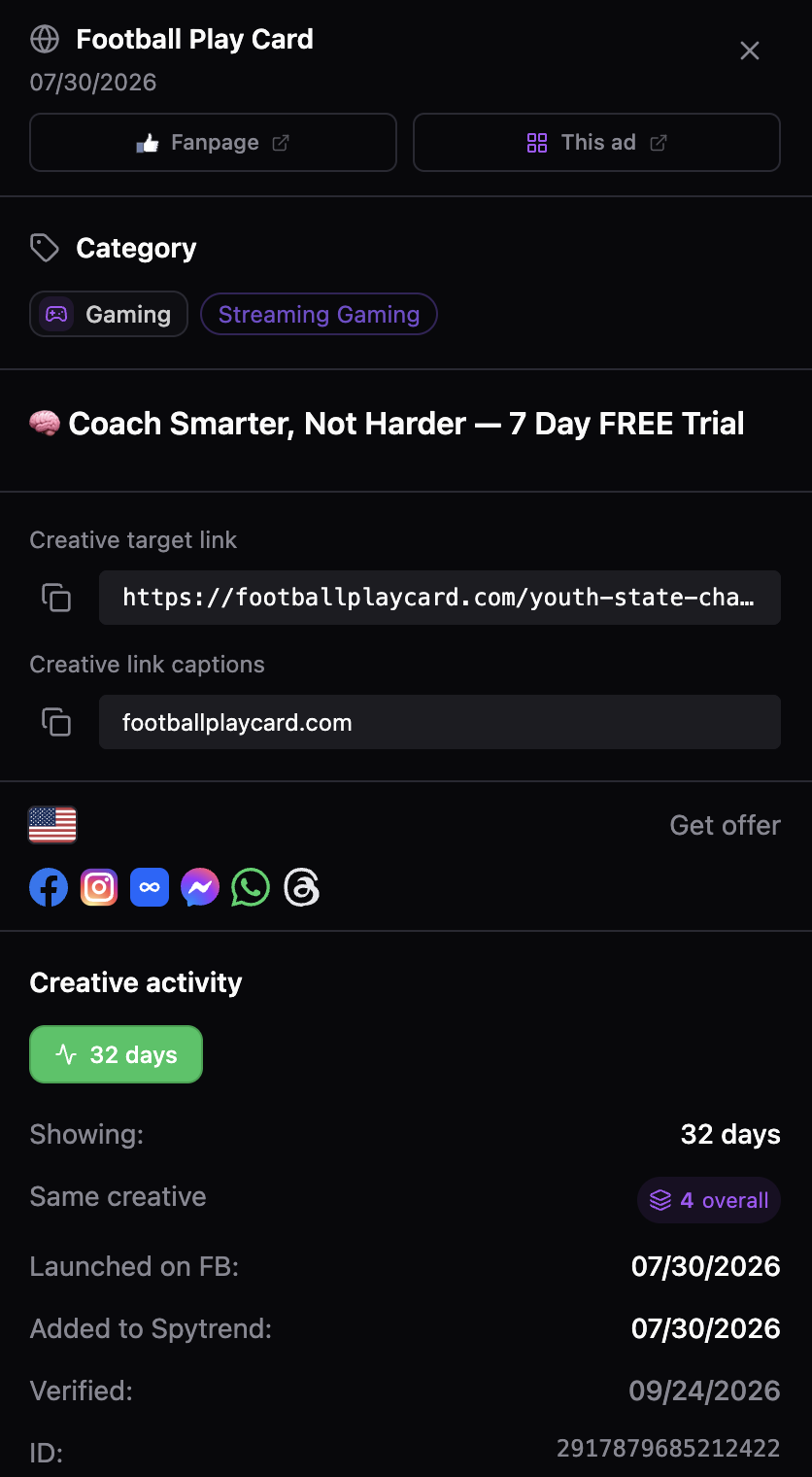
Football Play Card puts the offer in the headline: "Coach Smarter, Not Harder — 7 Day FREE Trial". Spytrend shows the same creative in 4 ads overall, so the advertiser has already reused it.
7. A product question with three colors (39 days)
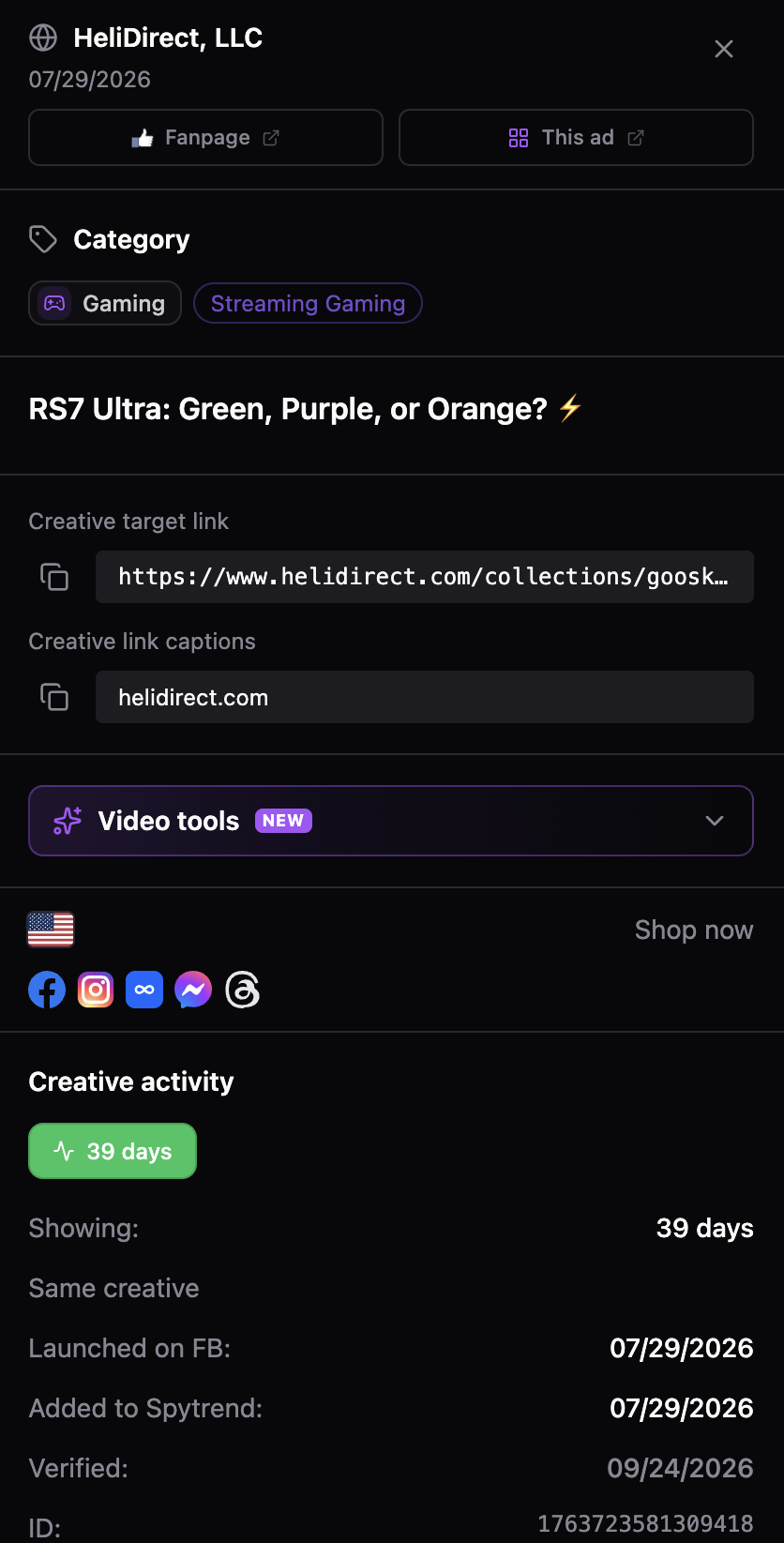
HeliDirect asks instead of telling: "RS7 Ultra: Green, Purple, or Orange?" A choice of colors invites a comment. It also moves the viewer past "do I want it" to "which one".
8. An app install ad from Fanatics Collect (40 days)
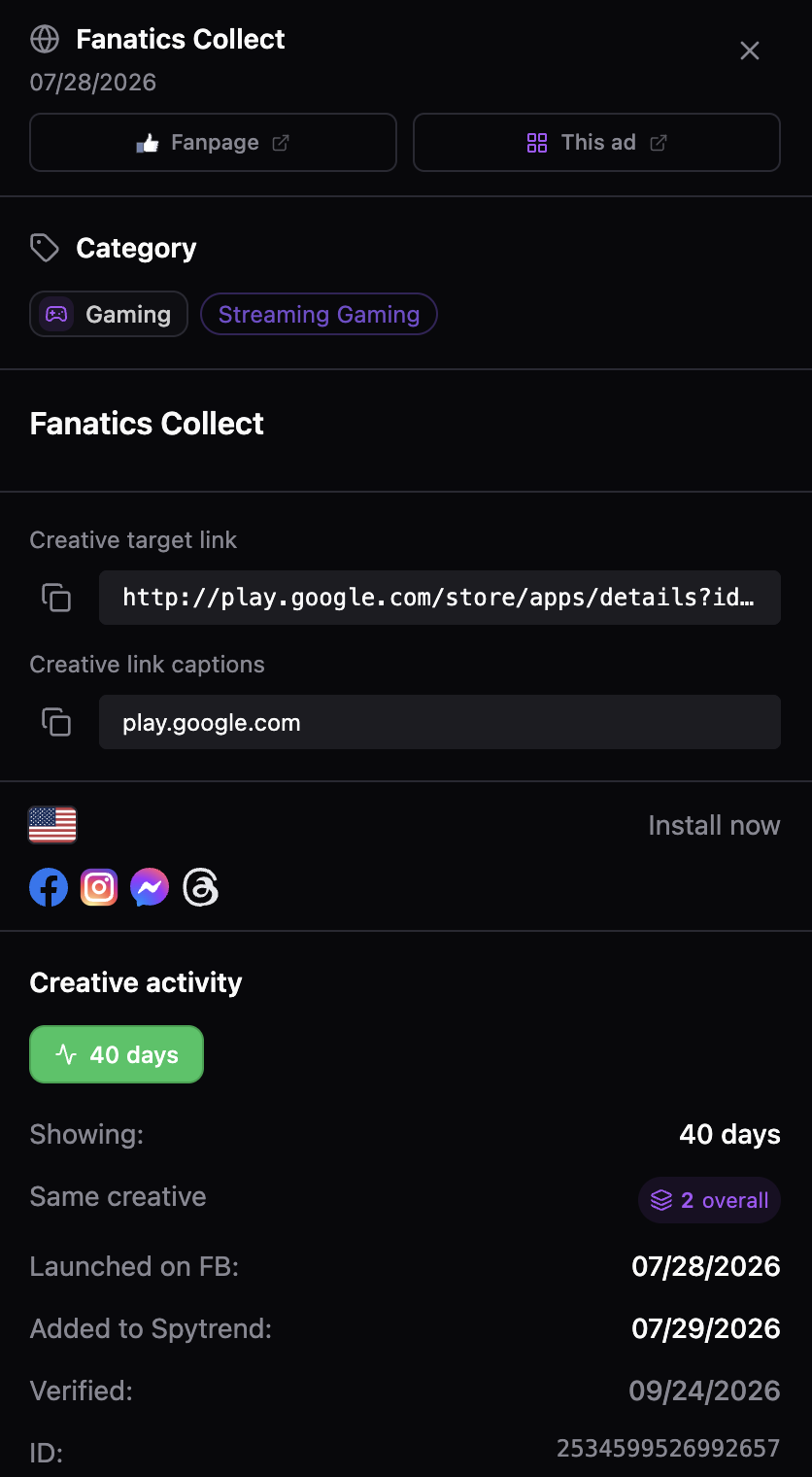
Fanatics Collect sends the click to its Google Play listing with an Install now button. The same creative appears in 2 ads overall, and this one had been running for 40 days.
9. A training product with a bare brand line (41 days)
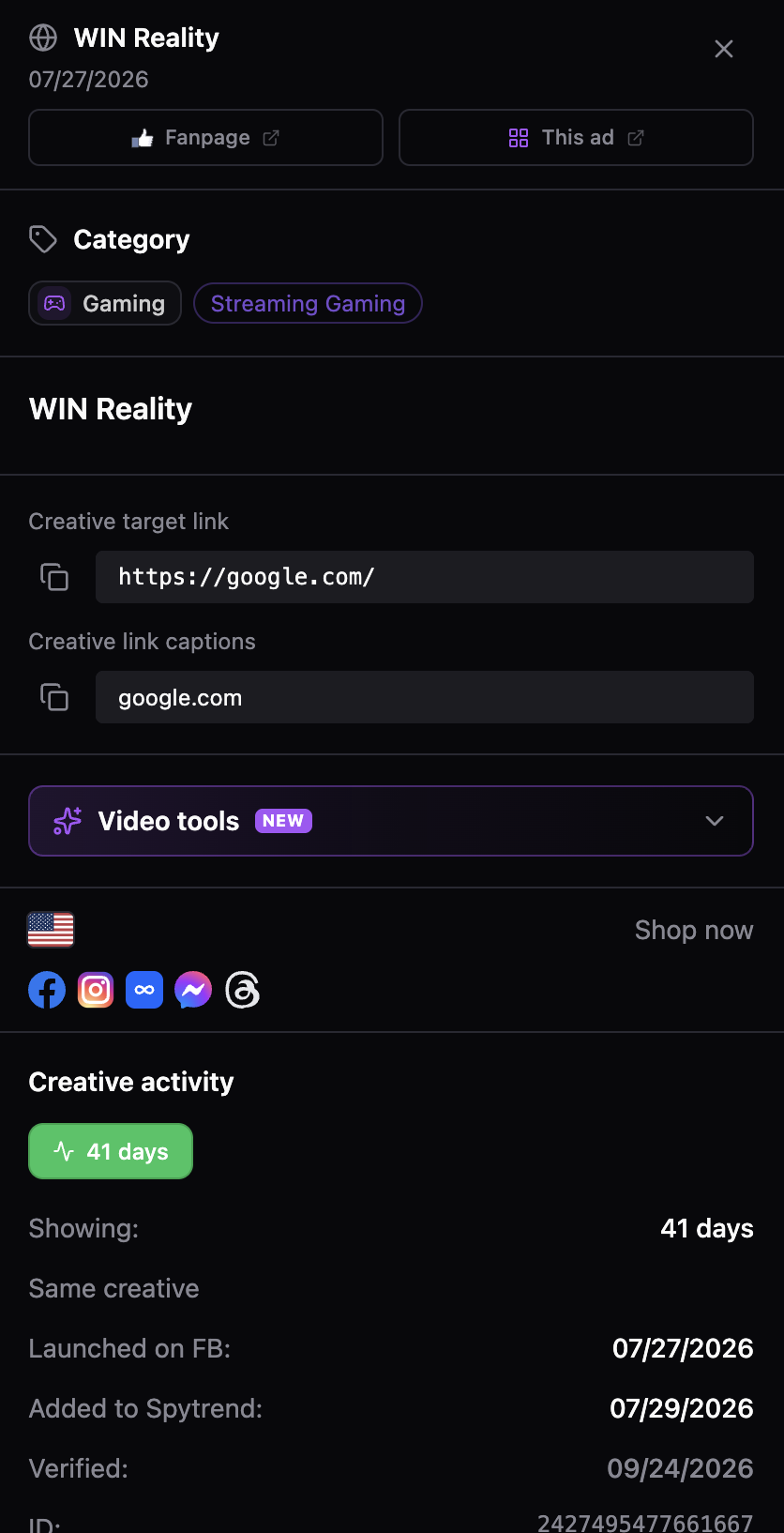
WIN Reality's ad carries little more than the brand name, and its target link is recorded as google.com. At 41 days, it's the longest-running ad in this set.
Home and small business
10. A bouquet post that links to Instagram (30 days)
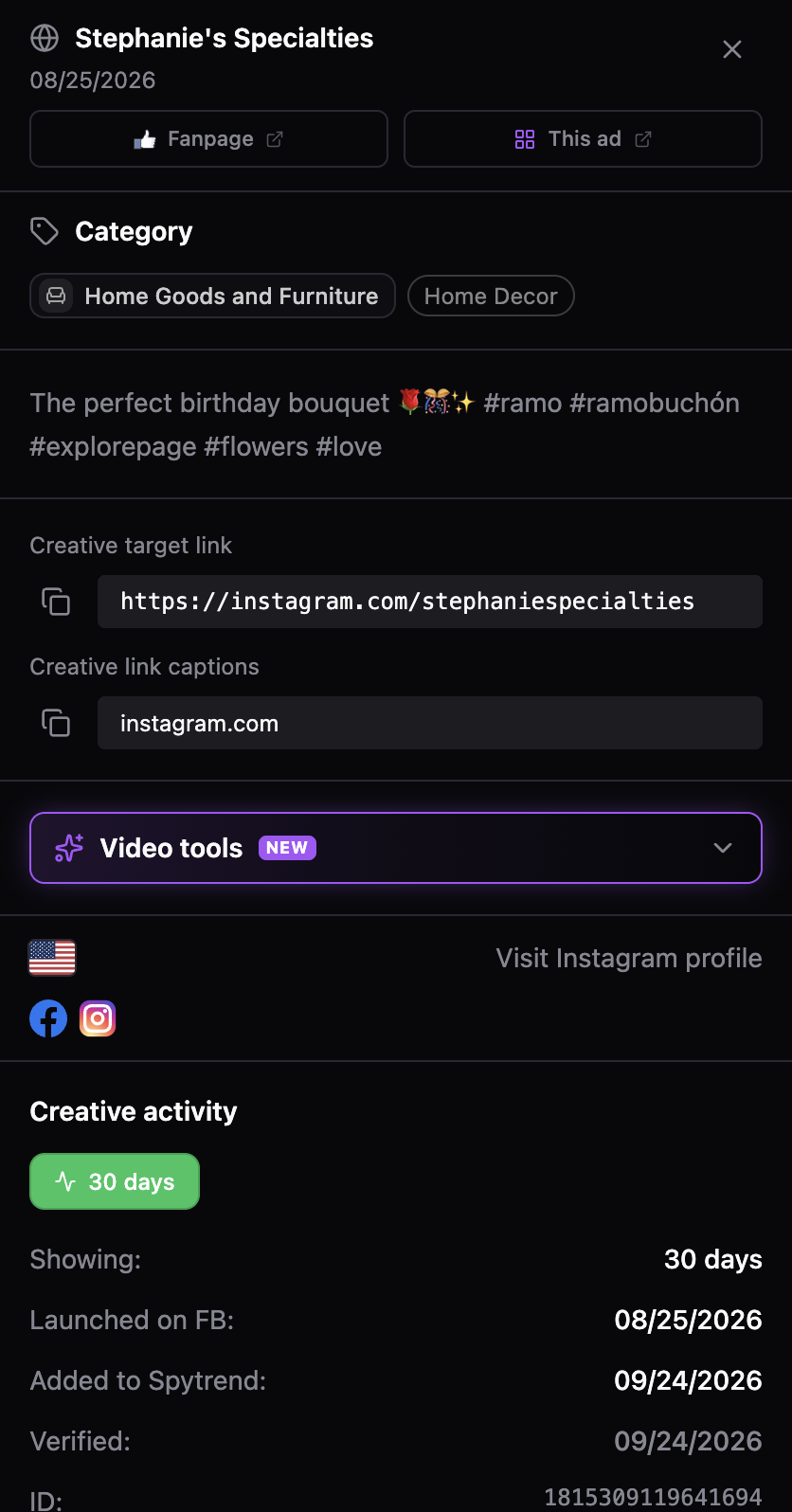
Stephanie's Specialties promotes a birthday bouquet with hashtags and sends people to its Instagram profile. The ad works as a boosted post. The goal is a new follower.
11. Stone slabs at a stated contractor price (31 days)
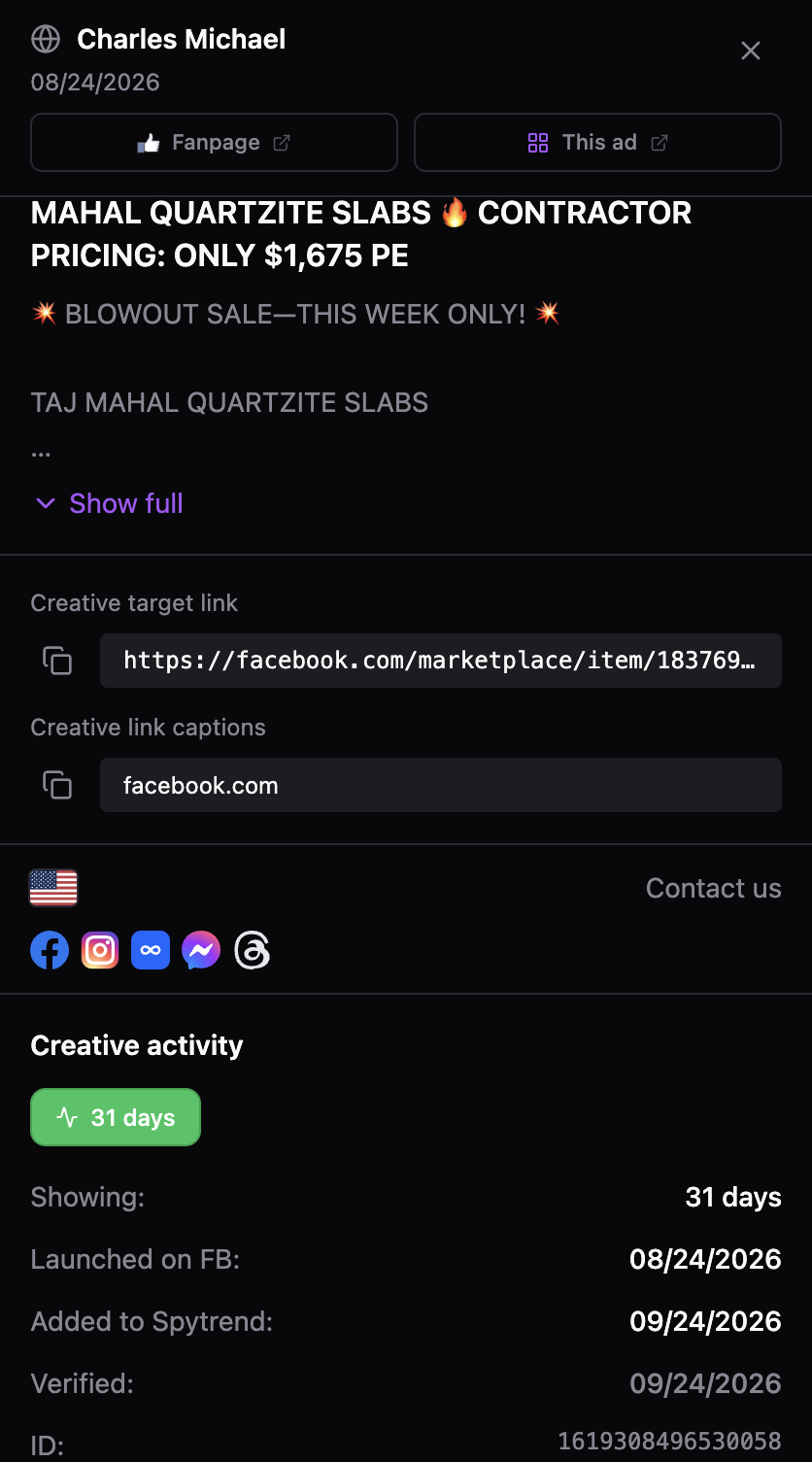
Charles Michael leads with a product and a number in capitals: quartzite slabs, contractor pricing, $1,675, "this week only". The click goes to a Facebook Marketplace listing, and the button says Contact us.
12. An RV resort sold on one evening (32 days)
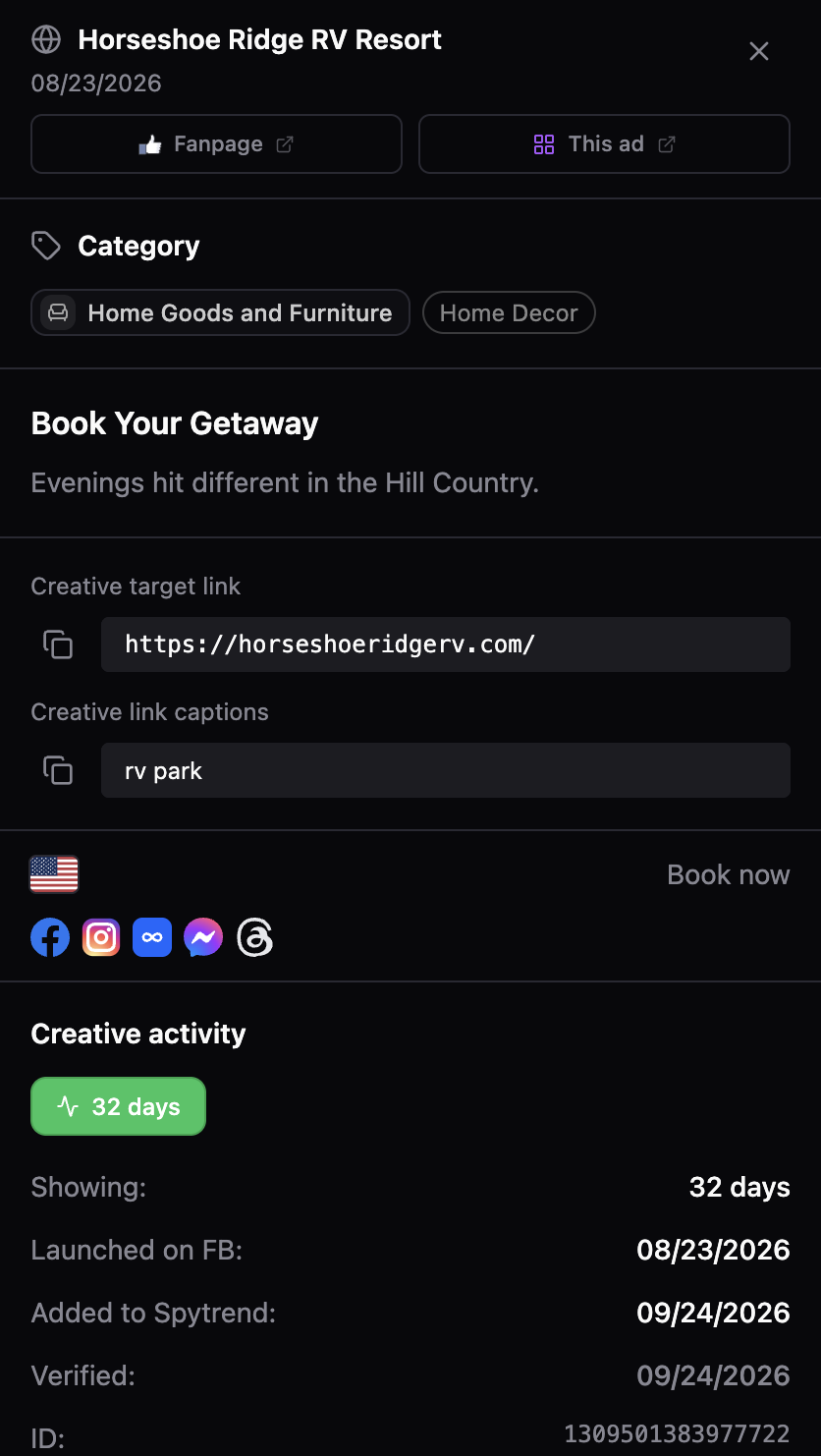
Horseshoe Ridge RV Resort pairs "Book Your Getaway" with one mood line: "Evenings hit different in the Hill Country." The button is Book now. The place gets a name, and the promise is a feeling.
13. B2B merch for breweries (30 days)
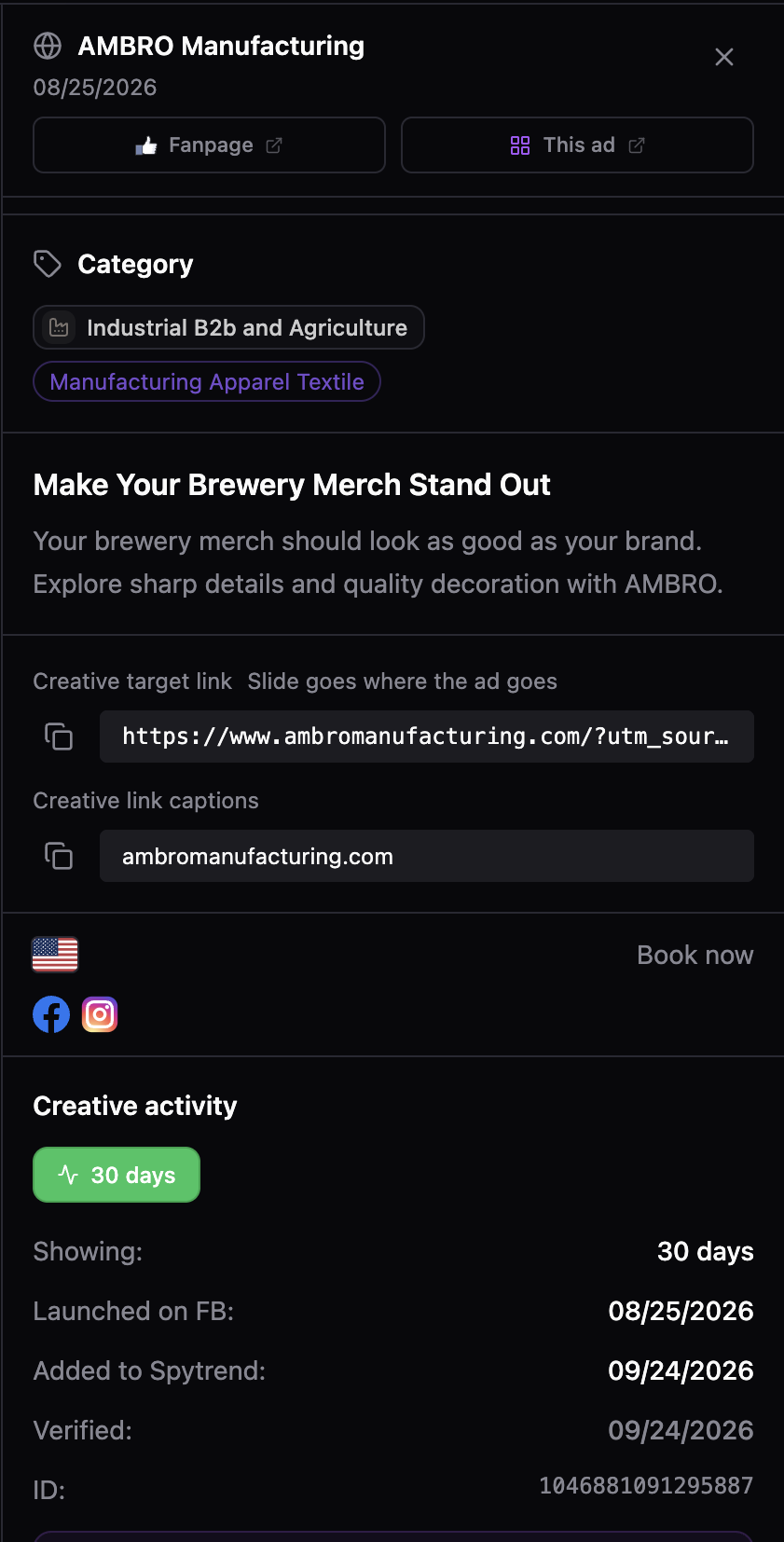
AMBRO Manufacturing names its buyer in the headline: "Make Your Brewery Merch Stand Out." That's how a B2B supplier filters its audience on a consumer platform.
Stores
14. A four-image furniture store ad (30 days)

The Designery Miami-Dade opens on a finished kitchen, the first of four images, and links to thedesignery.com. The area sits in the page name itself. A viewer knows the store is local before reading a line. It runs on six placements, WhatsApp included.
15. An Instagram-only product launch (31 days)
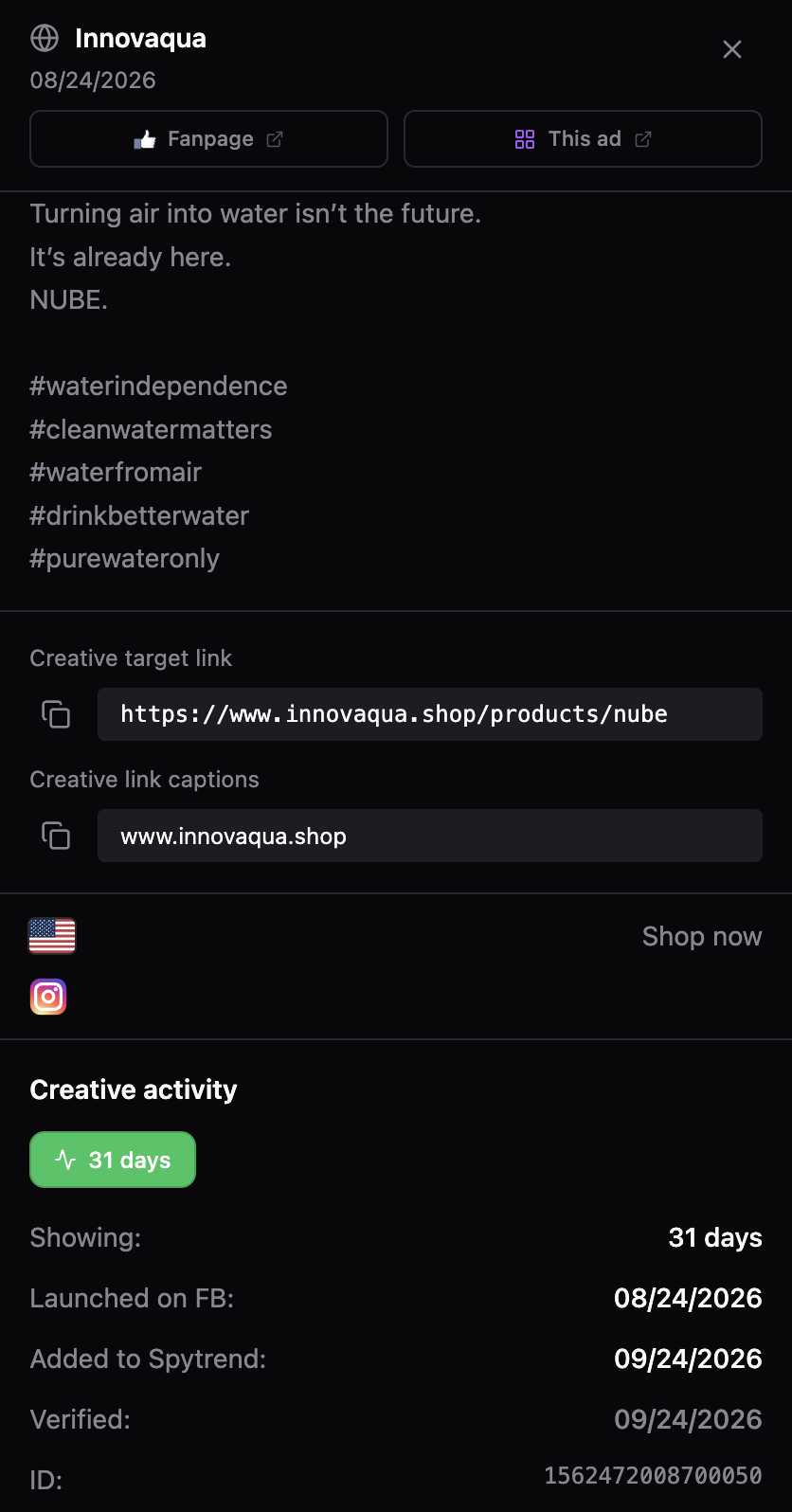
Innovaqua's NUBE ad says: "Turning air into water isn't the future. It's already here." Spytrend lists it on Instagram alone. Hashtags do the rest of the work, as they would in an organic post.
Automotive
The same filter with the category switched to Automotive: United States, Instagram, 30 days or more.
16. A used-car listing sent to Marketplace (32 days)
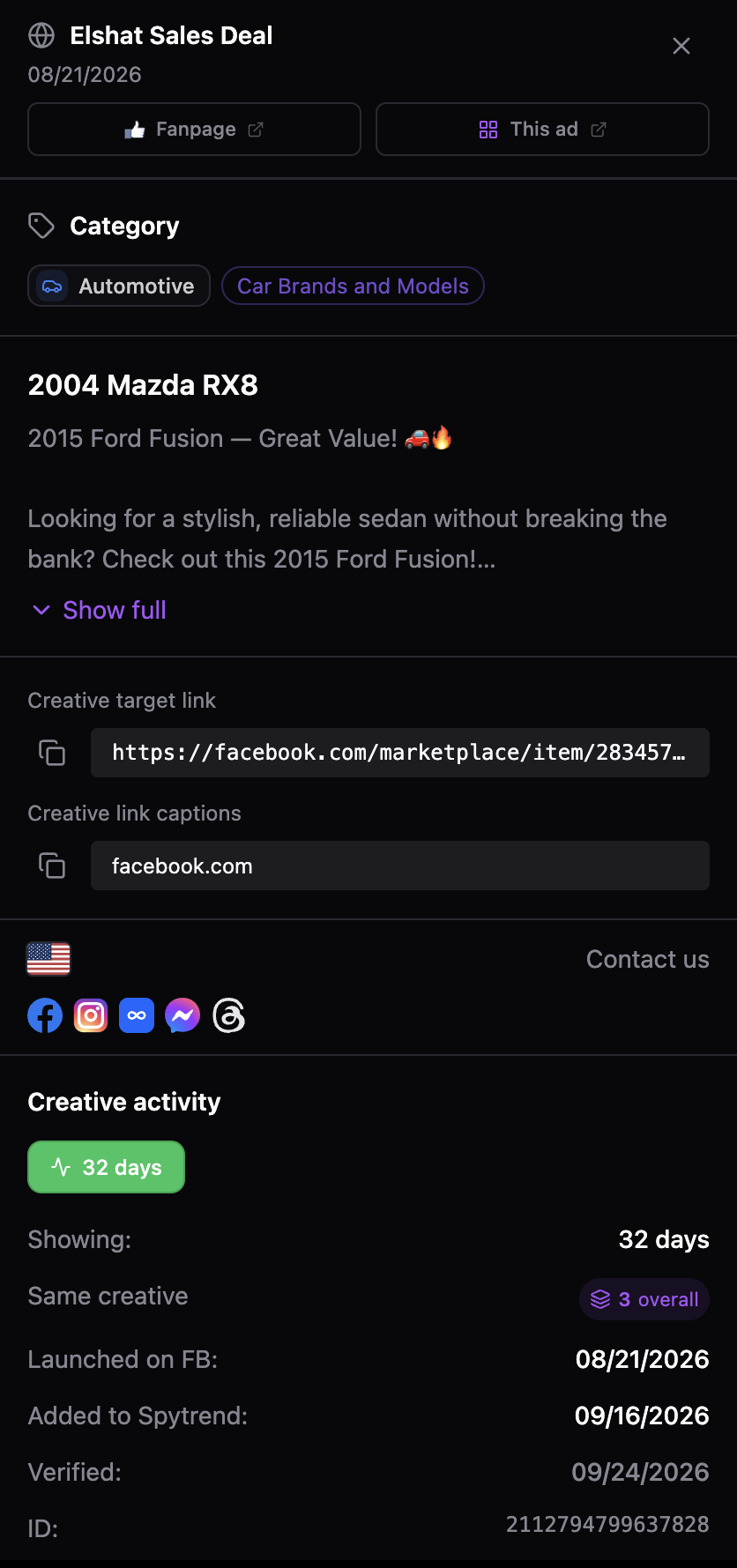
Elshat Sales Deal advertises single cars by model and year, such as "2004 Mazda RX8" and "2015 Ford Fusion — Great Value!" The click opens a Facebook Marketplace listing instead of a dealer site. The card counts three launches of the same creative.
17. A local tint shop that names its city (36 days)
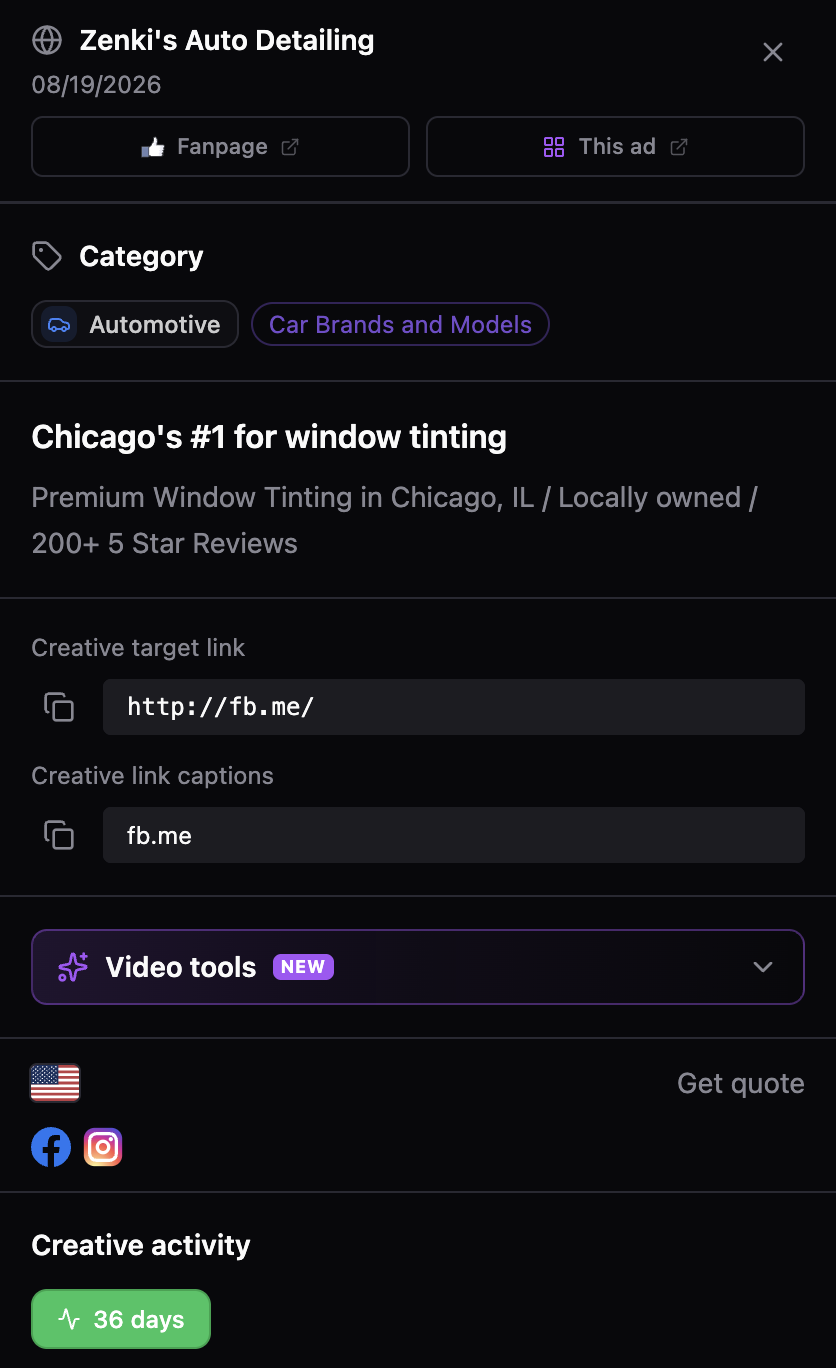
Zenki's Auto Detailing leads with "Chicago's #1 for window tinting" and backs it with "200+ 5 Star Reviews". The button is Get quote, and the link goes to the Facebook page. The ad starts a conversation first.
18. A price in the headline (32 days)
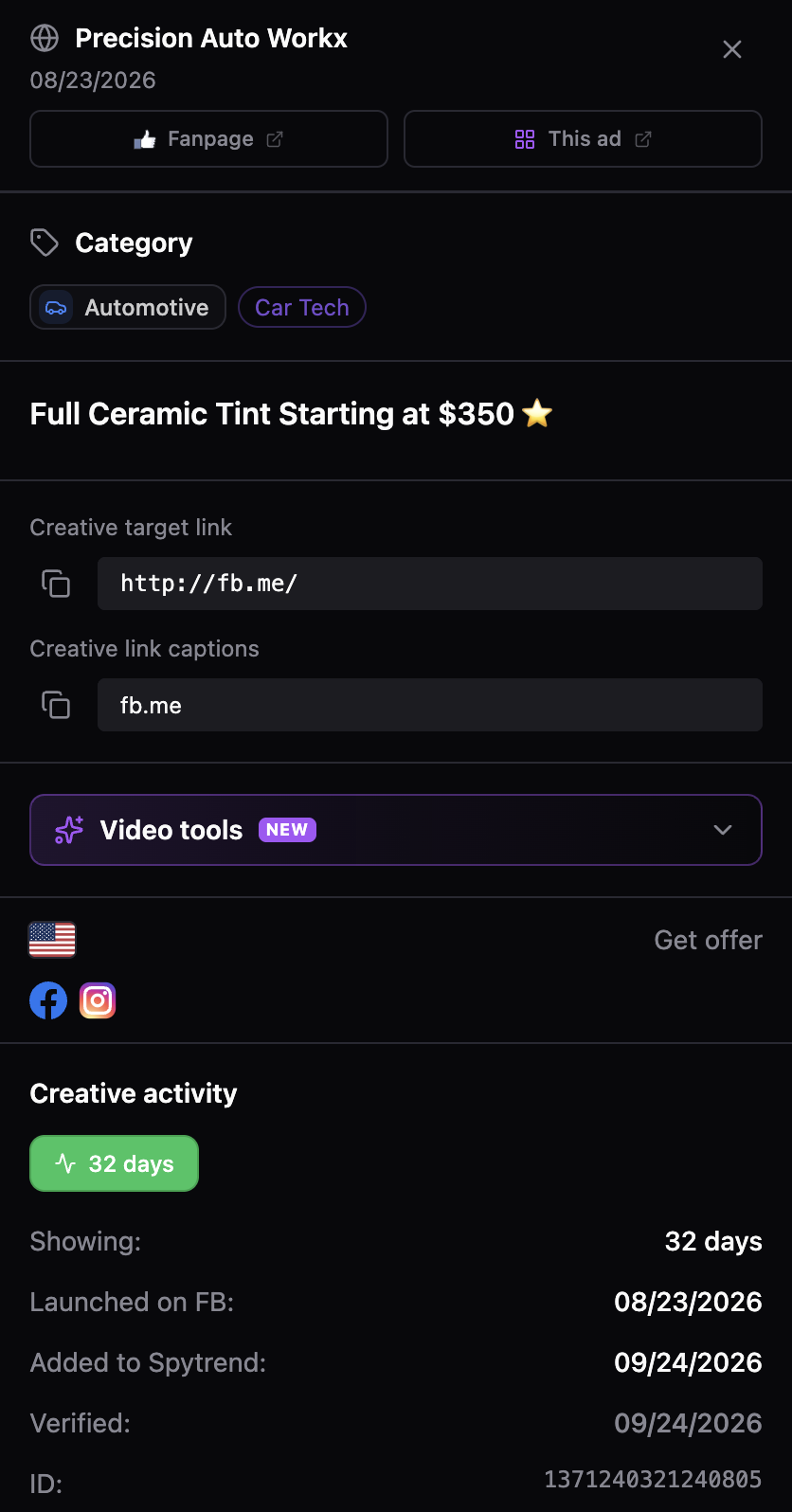
Precision Auto Workx puts the number first: "Full Ceramic Tint Starting at $350". The button is Get offer, and like example 17, it links to a Facebook page. A starting price screens out people who'd only ask and never book.
19. A two-image Instagram-only ad for car mods (31 days)
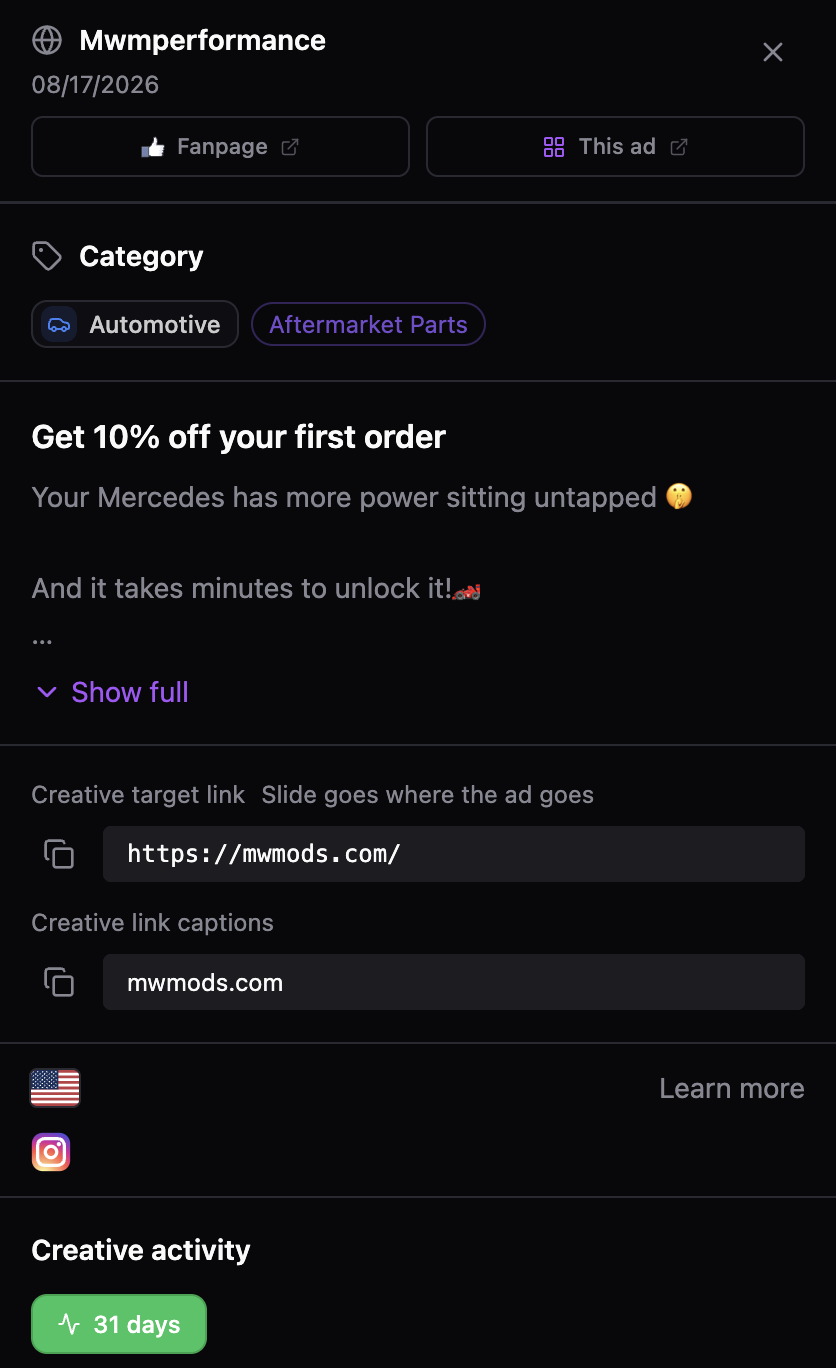
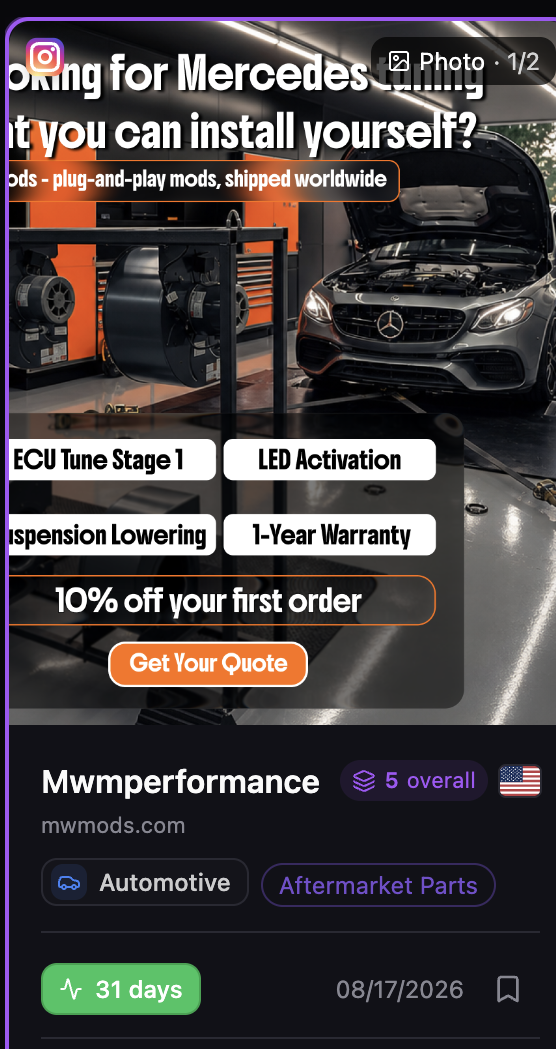
Mwmperformance opens with "Get 10% off your first order" and a line aimed at one owner: "Your Mercedes has more power sitting untapped". The first image lists three services and a one-year warranty on buttons. The click goes to mwmods.com with Learn more. It's the second Instagram-only ad in the set.
20. A dealership video from the lot (33 days)

Mazzarella's Auto Sales Vero runs a video filmed at the dealership, with a man on camera in front of the Mazzarella's sign. The link goes to the dealer's Facebook page. The ad invites a message or a visit.
What the twenty have in common
So what does "Instagram ad" mean in practice? Rarely Instagram alone. All twenty run there, and eighteen also run on Facebook. Thirteen add Messenger, Threads, Audience Network or WhatsApp. Only Innovaqua and Mwmperformance stay on Instagram only. Keep that in mind before you call a creative "made for Instagram".
The copy does a lot of the targeting. Shoperies names Greater Seattle, Zenki's names Chicago, AMBRO names breweries, and Easy to Eat by Eve simply writes in Thai. Once the ad says who it's for, the placement matters less.
Seven of the twenty send people to a Facebook page, an Instagram profile or a Marketplace listing instead of a website. Local and small sellers use ads like this to start a conversation.
The runs also bunch up just past the one-month mark: 30 to 41 days. These ads survived their first review. None of them has run for a season yet.
Instagram carousel ad examples: how to find ones that lasted
A carousel gives the viewer several cards to swipe, and each card can carry its own image, headline and link. That suits a range of products, a step-by-step story or a before-and-after split across cards.
Most of the twenty examples are single images or videos. Two are multi-image ads: Mwmperformance (example 19) has two images and The Designery (example 14) has four. Spytrend marks the count on each card. To pull carousel ads with the same proof of spend, keep the Instagram platform filter and the 30-day minimum, then set Format to carousel. Each result opens into the same ad card with run length, launch date and placements.
Five carousels from that search show five different uses of the format.
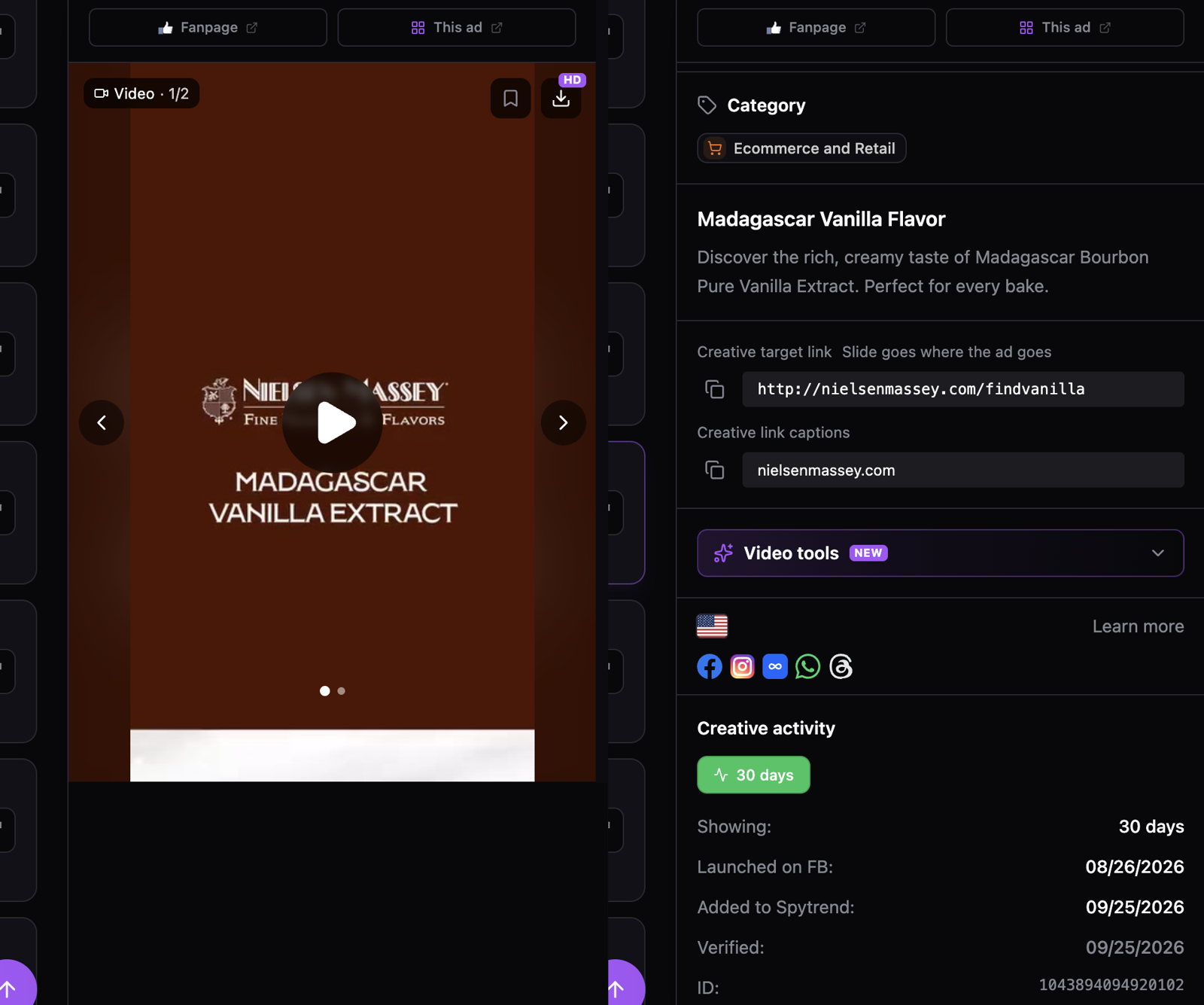
Nielsen-Massey puts a video on the first card: "Madagascar Vanilla Extract" in white letters on a dark brown background. The copy under it is plain: "Discover the rich, creamy taste of Madagascar Bourbon Pure Vanilla Extract. Perfect for every bake." The link reads nielsenmassey.com/findvanilla, and the button says Learn more. A second card waits behind the first.
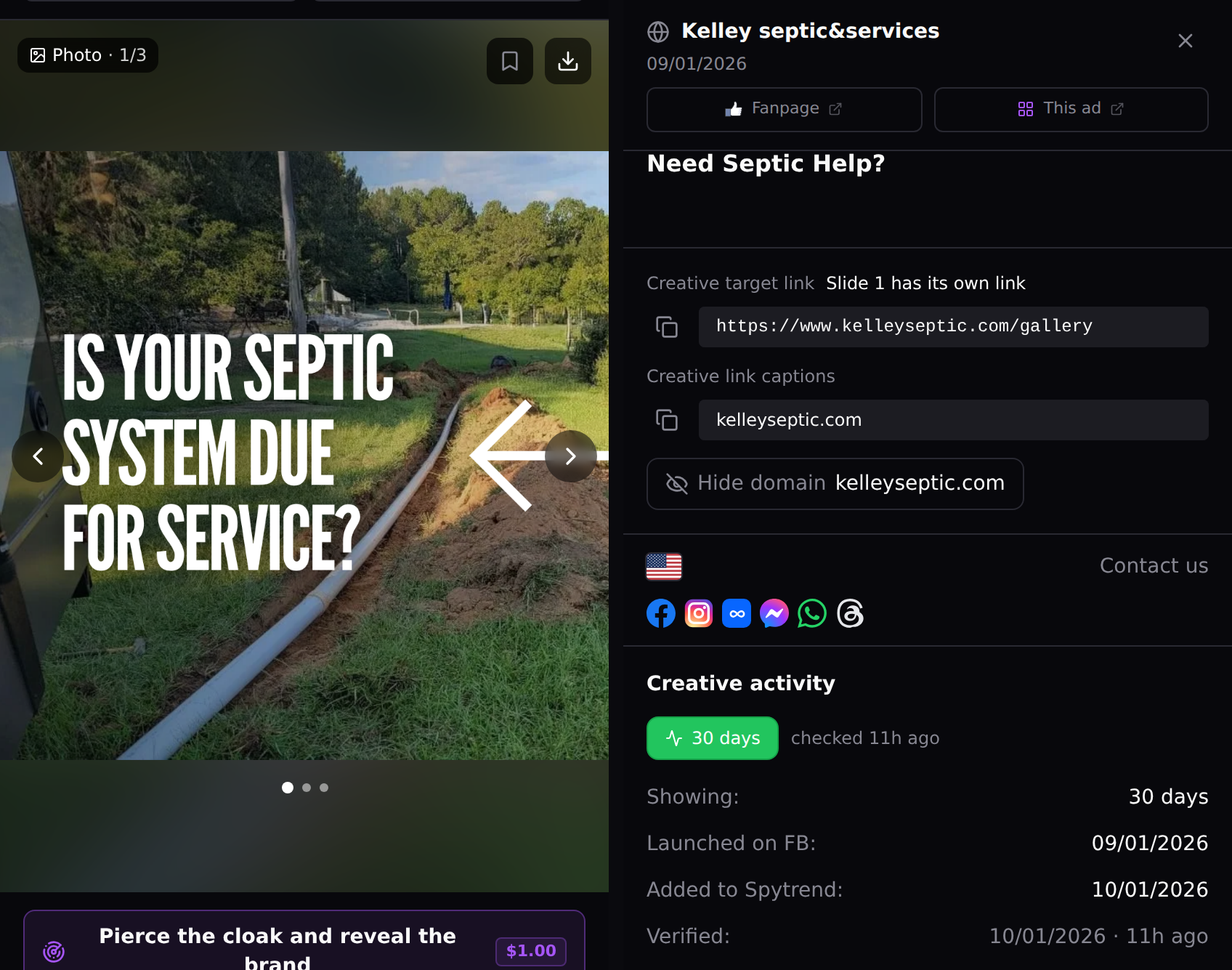
Kelley Septic & Services opens on a problem: "Is your septic system due for service?" in tall white letters over a freshly dug trench. The next two cards answer it. One lists the services, from tank pumping and inspections to repairs and installation, and the last promises "dependable septic and land services from one local team." Its link goes to a gallery page on kelleyseptic.com, and the button says Contact us.
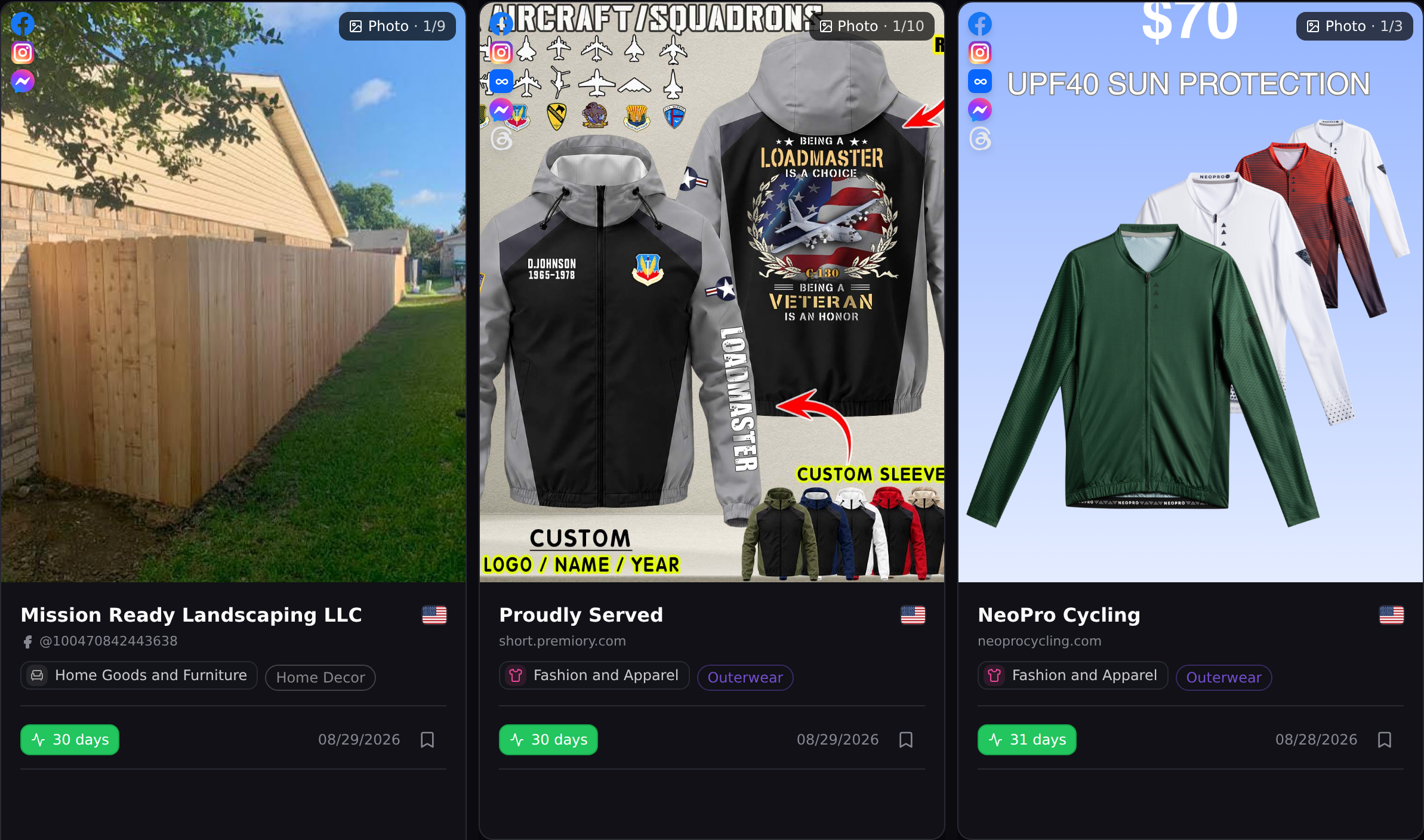
The other three use the extra cards for range. Mission Ready Landscaping has nine photos, and the first one shows a wooden fence along a house. For a local service, that reads like a portfolio. Proudly Served goes to ten cards for a custom jacket. The first card shows the jacket front and back, a name on the chest and a row of colors, with "Custom logo / name / year" at the bottom. NeoPro Cycling keeps it to three cards. The first one carries a price, $70, a "UPF40 sun protection" line and three jerseys in green, white and red.
These five run from two to ten cards, and each one stayed live for at least 30 days.
What to check in an Instagram carousel ad
Read a carousel that has lasted card by card. Start with the first card, because it's the only one most people ever see. Does it carry the offer, or only the hook that makes someone swipe? Then look at the order. A carousel that tells a sequence, from problem to product to result, works differently from one that lines up variants of the same item.
Links are easy to miss. Each card can point to its own page, so check whether the cards lead to separate products or to one landing page. Placements matter here as much as for single ads. Carousels usually run on several Meta apps, so check the list on the ad card before you call one Instagram-only.
What a 30-day run can't tell you
A month of spend shows the advertiser's confidence. It doesn't show the return. What an Instagram ad earned stays inside the advertiser's account. Spytrend estimates spend only as a from–to range.
The run length on each card belongs to that one ad. The same creative can sit in other ads with shorter or longer runs. The card for example 16 counts 3 launches of its creative, and the one for example 19 counts 5. And because Meta places most ads across several apps, part of a long run on Instagram can come from Facebook or Messenger placements.
What the Webmasters section adds
A creative launched by forty advertiser pages looks like forty independent bets. Sometimes it's one operator using forty page names. The webmaster card groups domains, pixels and Page IDs under one owner. That shows how many real competitors stand behind an example.
Example 9 makes a good test case. The ad is signed WIN Reality, and on its own it looks like one training brand with one page. Is it?
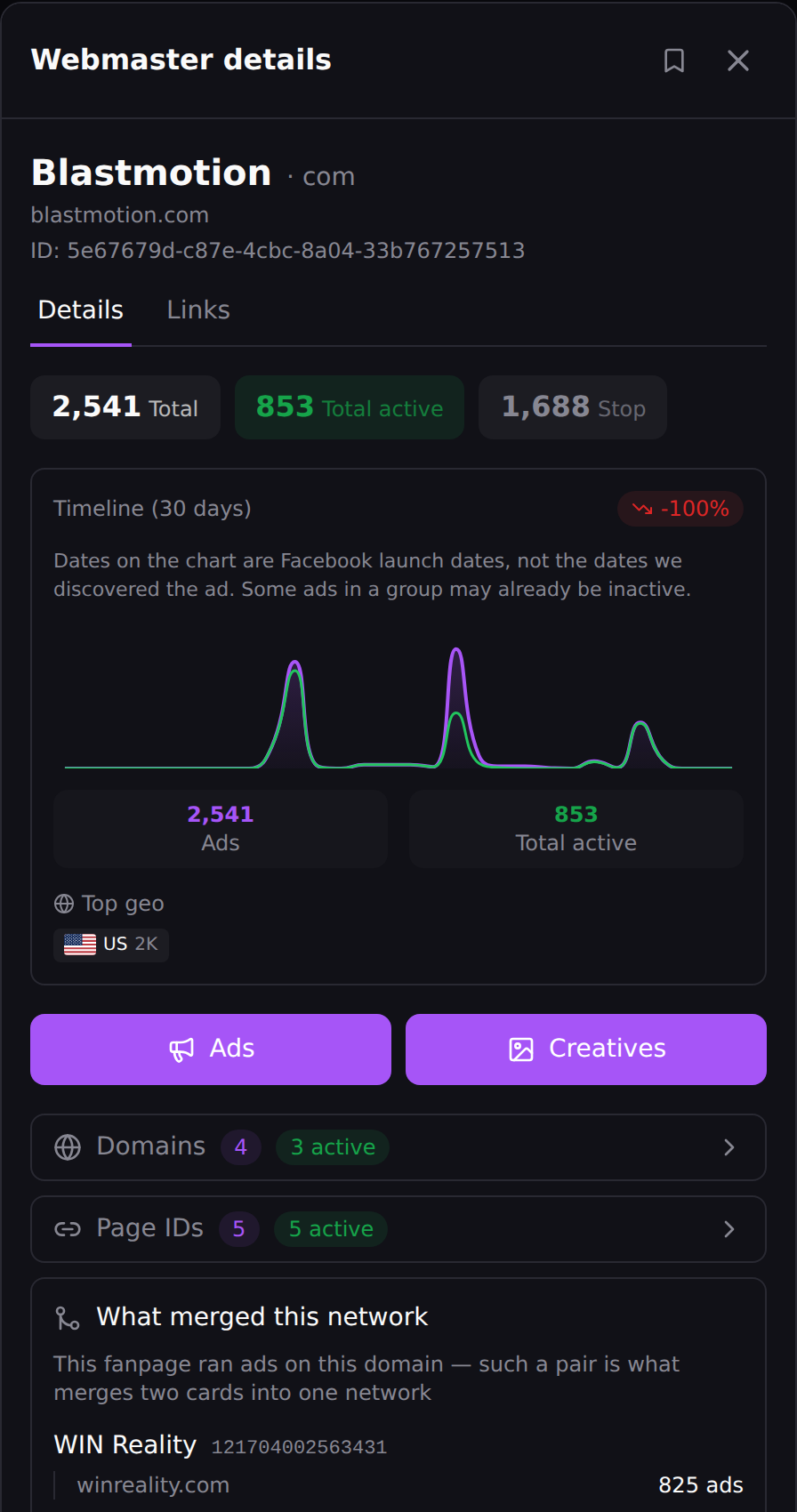
It isn't. Spytrend files the WIN Reality page under Blastmotion. The card explains why: the page ran ads on winreality.com, and a page–domain pair like that merges two cards into one network. Behind this one ad stand 4 domains, 5 pages and 2,541 ads, 853 of them still running. Open the card before you decide how crowded a niche is. The grouping itself is explained in the Webmasters write-up.
The twenty ads, the five carousels and the owner card were all pulled in Spytrend. In its own words, Spytrend is an ad intelligence platform for Facebook and TikTok advertising: an archive of ads going back to 2018, AI-classified into 33 business categories, with every advertiser assembled into a single card — all ads, pages, domains and countries in one place.
For Instagram research, the useful parts are the platform and format filters, the run-length filter and two sort orders: longest running first, or most re-uploaded first. The free Starter plan needs no card and shows ads older than three months. Current ads come with the paid plans on the pricing page. For a broader method of studying rivals, see the competitor ad research guide. Meta's own library for the same job will get its own walkthrough.
Want to test this on your own niche? Set the Instagram filter, raise the minimum to 30 days and open the first ten cards. Then compare their placements and links with the twenty above.
FAQ
Instagram ad examples: what makes one worth studying?
Instagram ad examples need more than good design. A useful example comes with proof that someone kept paying for it. An Instagram ad still live after a month had its budget renewed every day of that month. That's why every example here comes with its run length and placements.
Where can I see competitors' Instagram ads?
Start with Meta's Ad Library. It costs nothing and lists the Facebook and Instagram ads any page has live today, each with its launch date. Once an ad stops, it drops out of view. Spytrend keeps stopped ads in its archive and lets you filter by platform and by run length.
Do Instagram ads run only on Instagram?
Usually not. Meta places most ads across several apps at once, such as Facebook, Instagram and Messenger. An Instagram filter finds ads that run on Instagram, including ones that also run elsewhere. Check the platforms listed on the ad's card before you call an example Instagram-only.
How long should an Instagram ad run before you judge it?
There's no single rule, but 30 days is a useful line. Advertisers often switch off short tests within a week or two. An ad still funded after a month has passed the advertiser's own review. The twenty ads here had been showing for 30 to 41 days on the day they were checked.
Instagram carousel ad examples: do they beat single images?
In Instagram carousel ad examples, neither format wins by default. Most of the twenty examples here that lasted 30 days are single images or videos, so a single frame can hold a budget for a month. A carousel suits products with several variants or steps. A single image suits one clear offer.
Is Spytrend the same as Instagram's own ad tools?
No. Meta's tools are for building and running your own campaigns. Spytrend looks outward: it gathers other advertisers' Facebook and TikTok ads and lets you compare their run length, re-uploads and the owner behind each set of pages.