Quick answer: AdSpy vs Dropispy comes down to budget and freshness. Dropispy starts free and runs on credits, with Premium at €14.90 a month billed yearly. AdSpy has one $149 plan and shows this week's ads. Spytrend shows the seller behind a group of stores, on Facebook and TikTok.
Dropispy vs AdSpy: three tools side by side
Both tools cover Facebook ads, and store owners use both. They differ in what it costs to start and how fresh the ads are once you're in.
| Dropispy | AdSpy | Spytrend | |
|---|---|---|---|
| Ad networks | Facebook feed in the app | Facebook and Instagram | Facebook and TikTok |
| Free access | Free plan, no card; the last two months of ads are hidden (Sep 30, 2026) | No free plan; my account had a one-time credit of ad views, with advertiser names and full text hidden (Sep 28, 2026) | Starter is free, needs no card and opens ads three months and older |
| Price | Premium €14.90 a month billed yearly, marked "50% Off"; Business €249.90 a month; euros in the app (Sep 28, 2026) | One plan, $149 a month, labeled introductory (Sep 28, 2026) | Paid plans listed on Spytrend's pricing page |
| Refunds | No guarantee; in rare cases, within 24 hours of a first purchase (Sep 28, 2026) | Full refund within 24 hours, later ones at AdSpy's discretion (Sep 28, 2026) | 14-day money-back guarantee |
| What limits use | Credits: 150,000 a month on Premium, 1,800,000 on Business | "Virtually unlimited usage", in AdSpy's own words | Search without limits inside the categories you've paid for |
| Store search | A Dropshipping preset with an Ecom Platform filter, plus a Domain filter | A Technologies filter (Shopify and others), plus comment and affiliate-offer search | 33 business categories and the owner behind a set of stores |
| Built around | Browsing store ads cheaply, two months behind | This week's ads, found by text, comments or offer | Finding who is behind a group of stores |
How I tested
I worked in a free Dropispy account and in an AdSpy account that still had its welcome views. In each, I looked for store ads and read the plan screens, the FAQ and the refund terms. Then I took one store that AdSpy had found and looked it up in Dropispy by its domain. In Spytrend, I looked at one seller's card in the Webmasters section.
Where this test stops: I never ran one product word through both tools. Dropispy's free plan didn't give me a way to search ad text, so there I used its Dropshipping preset and the Domain filter. I didn't pay for either tool, so AdSpy's full ad text and Dropispy's paid filters stay outside this test.
Dropispy vs AdSpy pricing: credits against one flat plan
Dropispy pricing starts at zero, and the Free plan asks for no card. In my account the plan table showed prices in euros. With "Pay annually" switched on, Premium read €14.90 a month under a red "50% Off" label. Business stayed at €249.90 a month. Premium includes 150,000 credits a month, and Business 1,800,000.
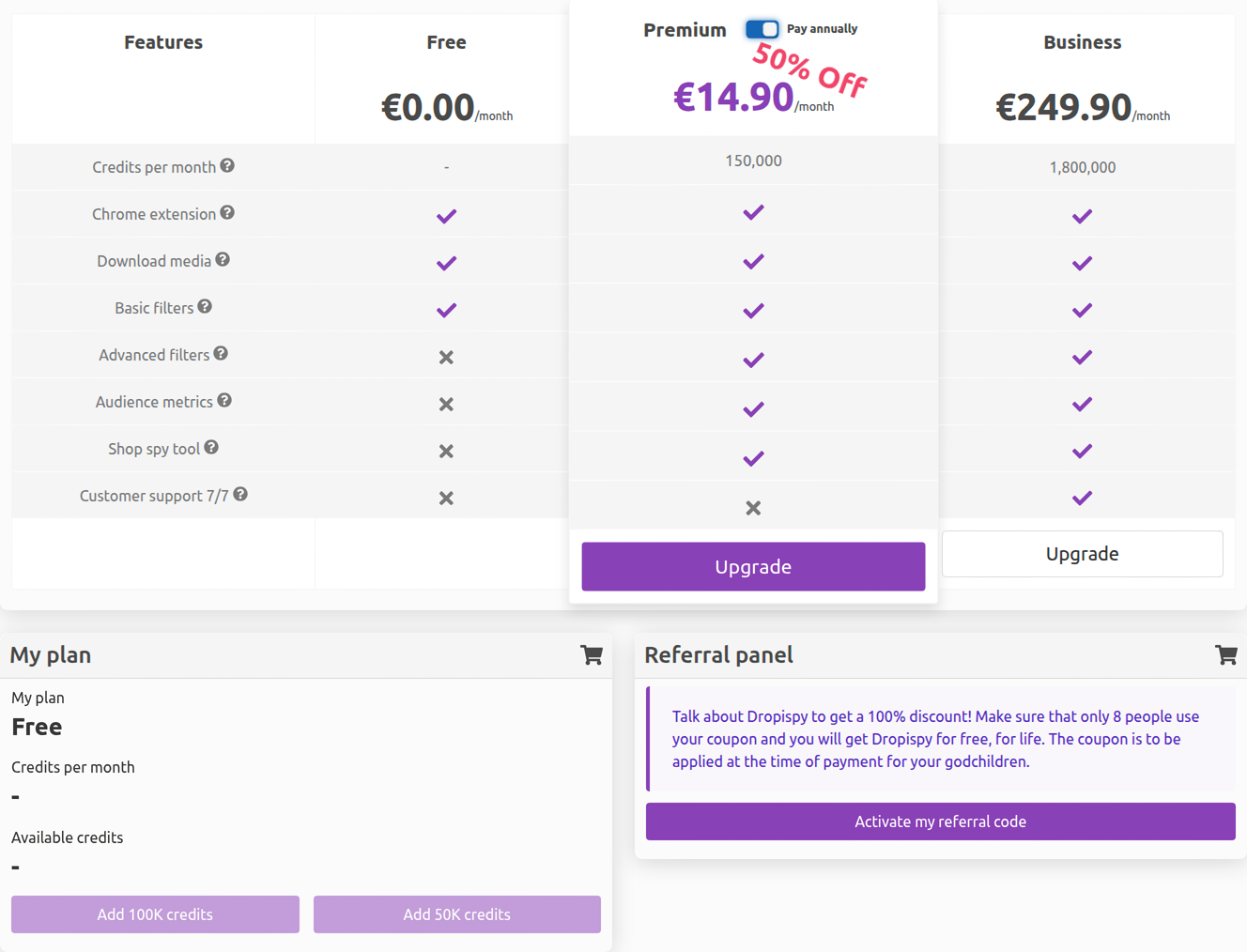
The same table shows what Free leaves out. Chrome extension, media downloads and basic filters are ticked on all three plans. Advanced filters, audience metrics and the Shop spy tool are crossed out on Free, and 7/7 support comes only with Business. Next to my plan, a Referral panel offers another way to pay less: if eight people use your coupon, Dropispy is free for life.
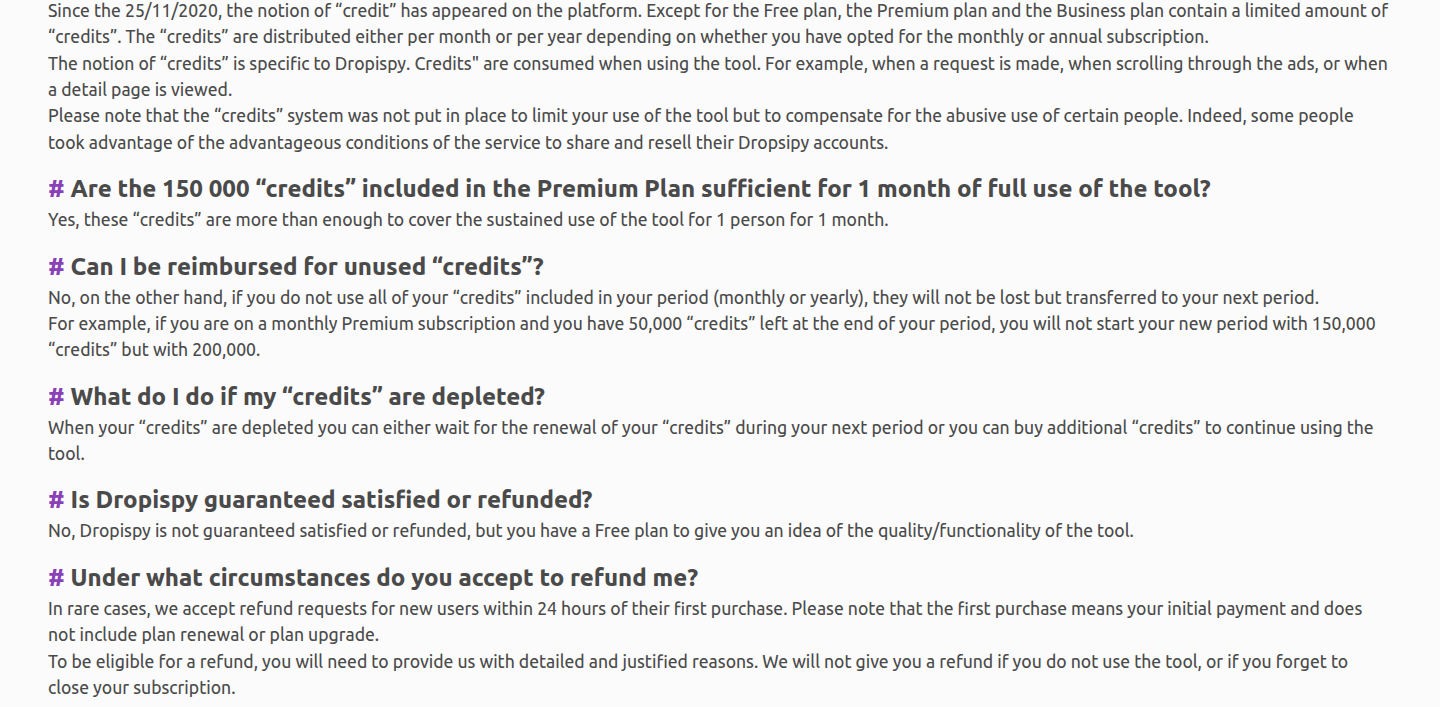
So how far do the credits go? Dropispy's FAQ lists three things that spend them: running a request, scrolling through the ads and opening a detail page. It calls 150,000 "more than enough" for one person's sustained use for a month.
The FAQ is also frank about why credits exist: some people were sharing and reselling their accounts. Unused credits roll over. In the FAQ's own example, 50,000 left at the end of a month means the next one starts at 200,000. When they run out, you wait for renewal or buy more.
Refunds are the weak spot. The FAQ says plainly that Dropispy isn't "guaranteed satisfied or refunded". In rare cases it accepts a request from a new user within 24 hours of the first purchase. You'll need "detailed and justified reasons", and forgetting to cancel doesn't count as one.
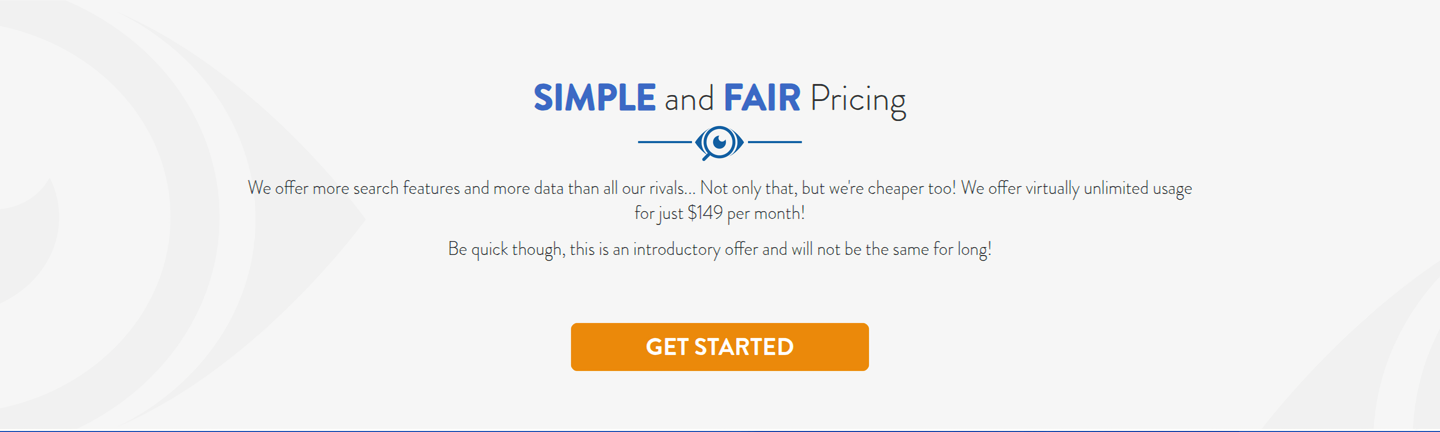
AdSpy pricing is one line on its homepage: $149 a month for "virtually unlimited usage". The same block calls the price introductory and warns it won't stay that way for long. There's no free plan and no cheaper tier. My account still had part of its one-time welcome credit, and the Subscription row read "Views Left: 910".
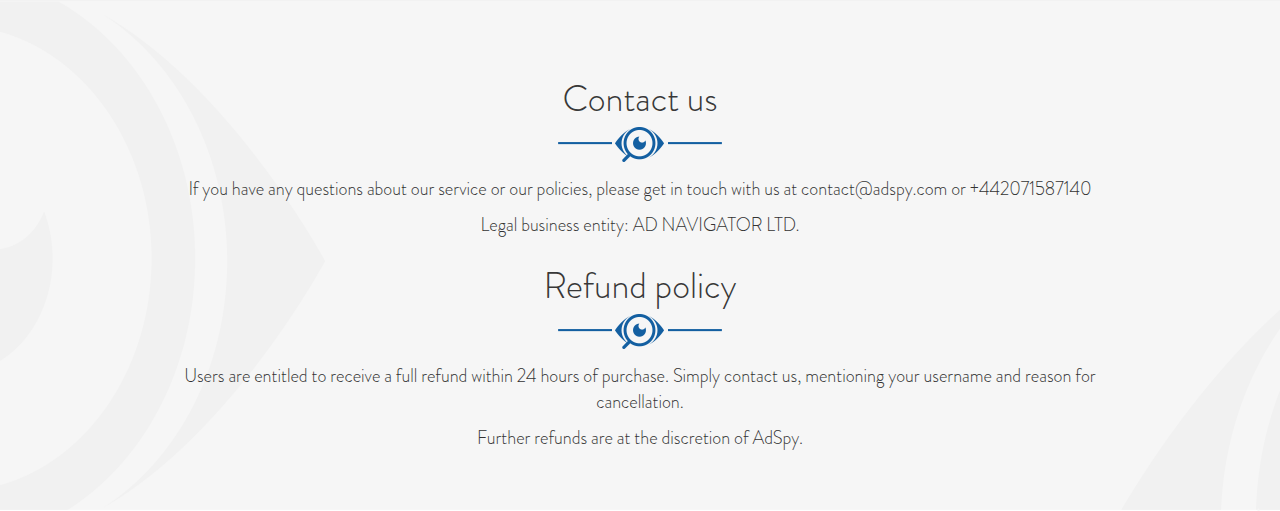
AdSpy's info page gives you 24 hours after purchase to ask for a full refund, with your username and a reason. After that, refunds are "at the discretion of AdSpy". The same page names the company behind the tool, AD NAVIGATOR LTD.

For a small budget, the math is short. A year of Dropispy Premium at the yearly rate comes to €178.80. One month of AdSpy is $149, so a year of one sits in the same range as a month of the other.
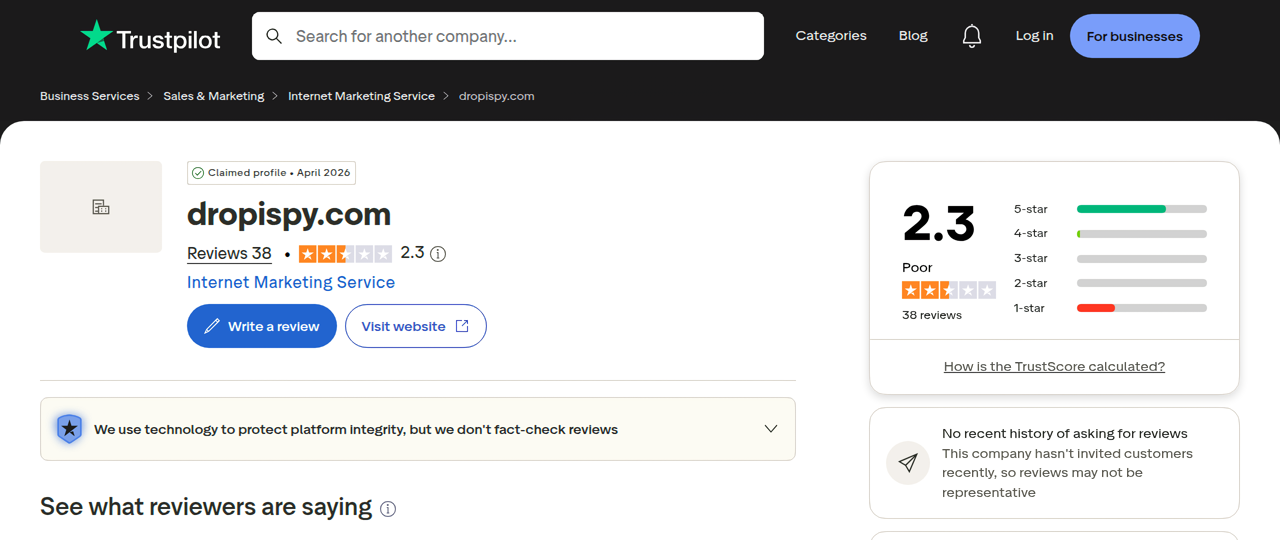
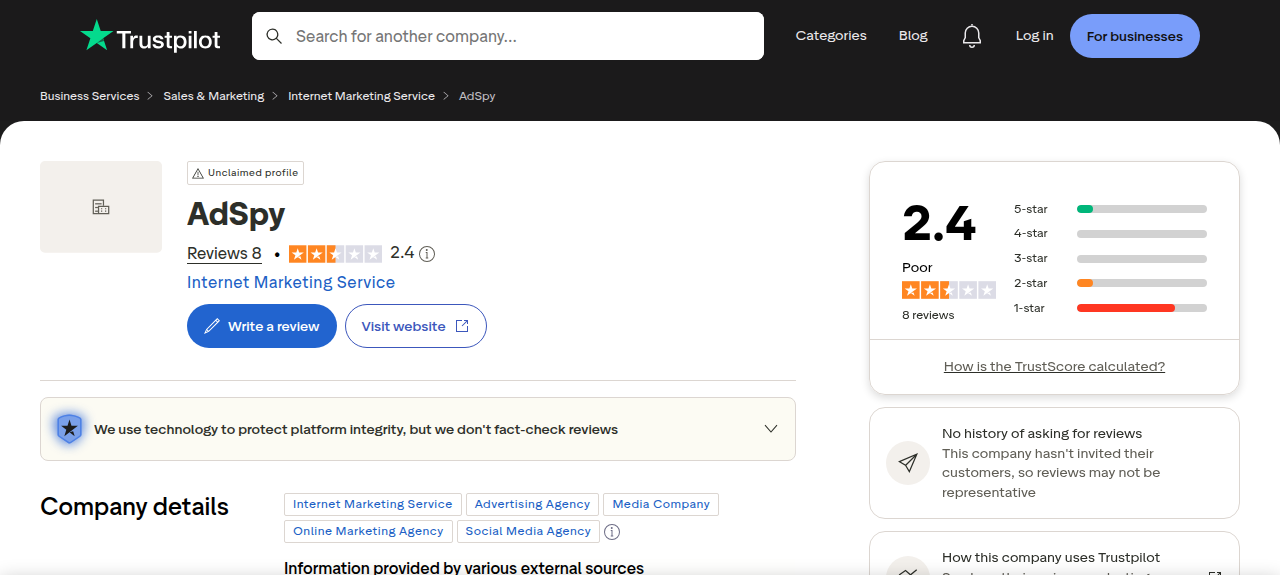
Outside ratings don't settle it. On Trustpilot, Dropispy has 2.3 out of 5 from 38 reviews, with the 5-star bar longest and the 1-star bar next. AdSpy has 2.4 from 8 on a profile it hasn't claimed, and its 1-star bar is the longest. Neither company has been asking customers for reviews lately, and Trustpilot itself warns that such reviews may not be representative.
AdSpy vs Dropispy for e-commerce ads on Facebook
Dropispy is built around stores. Its free feed offers a Dropshipping preset, and picking it adds an Ecom Platform chip for Shopify, Magento and WooCommerce. The yellow notice above the results stays put, though. On the free plan, ads from the last two months aren't displayed, and every card under the preset sat behind that cutoff.

AdSpy gets to store ads from the search side. I set the Technologies filter to Shopify and typed "shower head" into the Ad Text field. The top result had been created five days before my search.
It sold a shower hose kit for camping, from an advertiser whose name ended in "(subscribe to see name)". The text broke off at "Purchase subscription to view full text". Dates and creatives are open on the welcome views, while the name and the full copy cost $149.
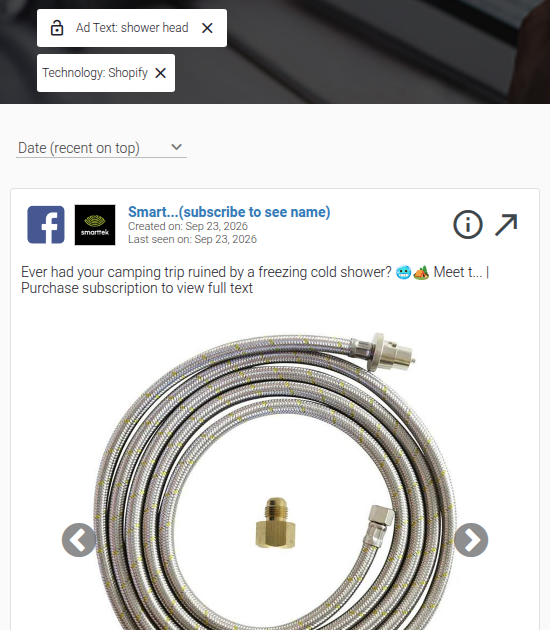
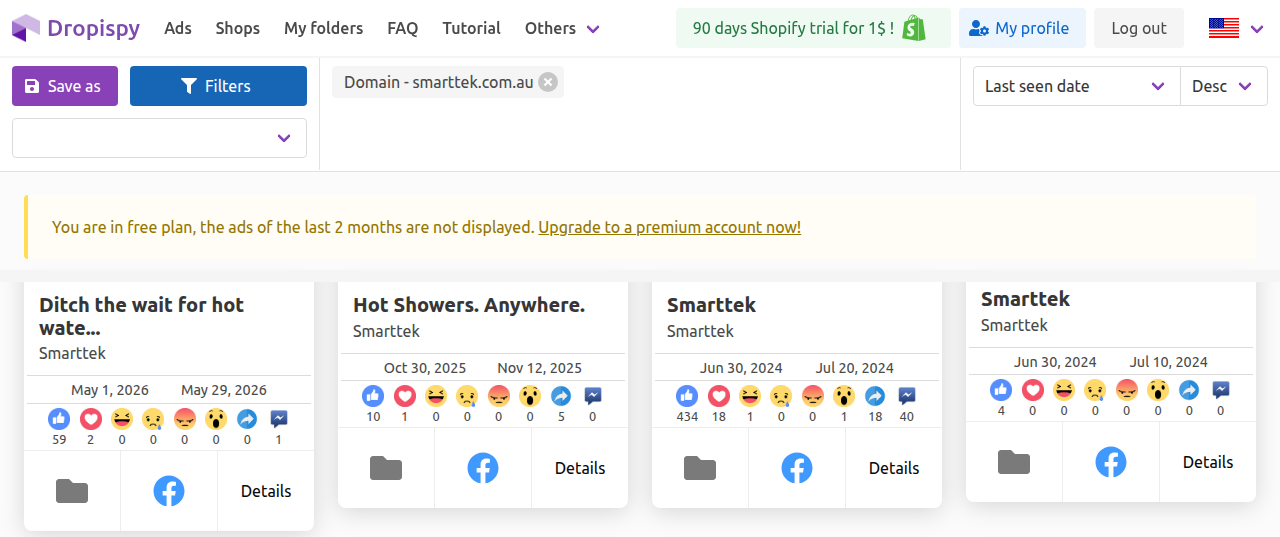
The logo on that card read smarttek, and the ad led to smarttek.com.au, an Australian store selling portable hot-water kits. I filtered the free Dropispy feed by that domain.
It listed four of the store's ads, all of them old. The newest had stopped running about four months before I looked, and the other three went back one and two years. The ad AdSpy had found that week wasn't there.
Each Dropispy card does show the store's name, the run dates and the reactions, and one older Smarttek ad had 434 likes.
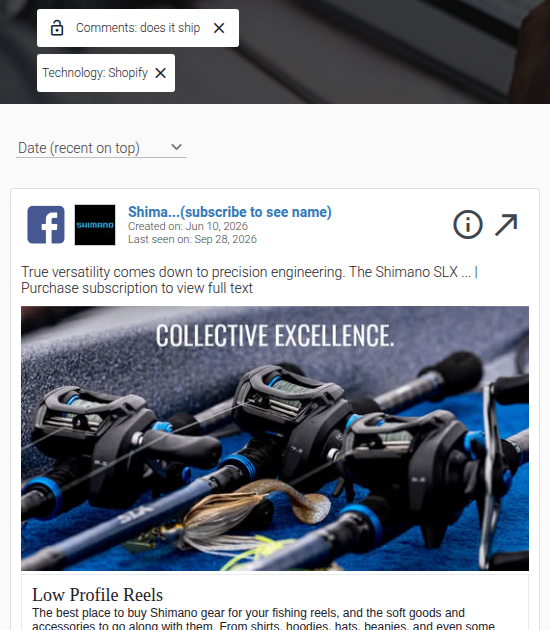
What else can AdSpy search? I switched the field from Ad Text to Comments, so the box looked through what people write under ads. With "does it ship" and the Shopify filter, the top result was a Shimano fishing-reel ad. It had been created three and a half months before my search and was still being seen that day.
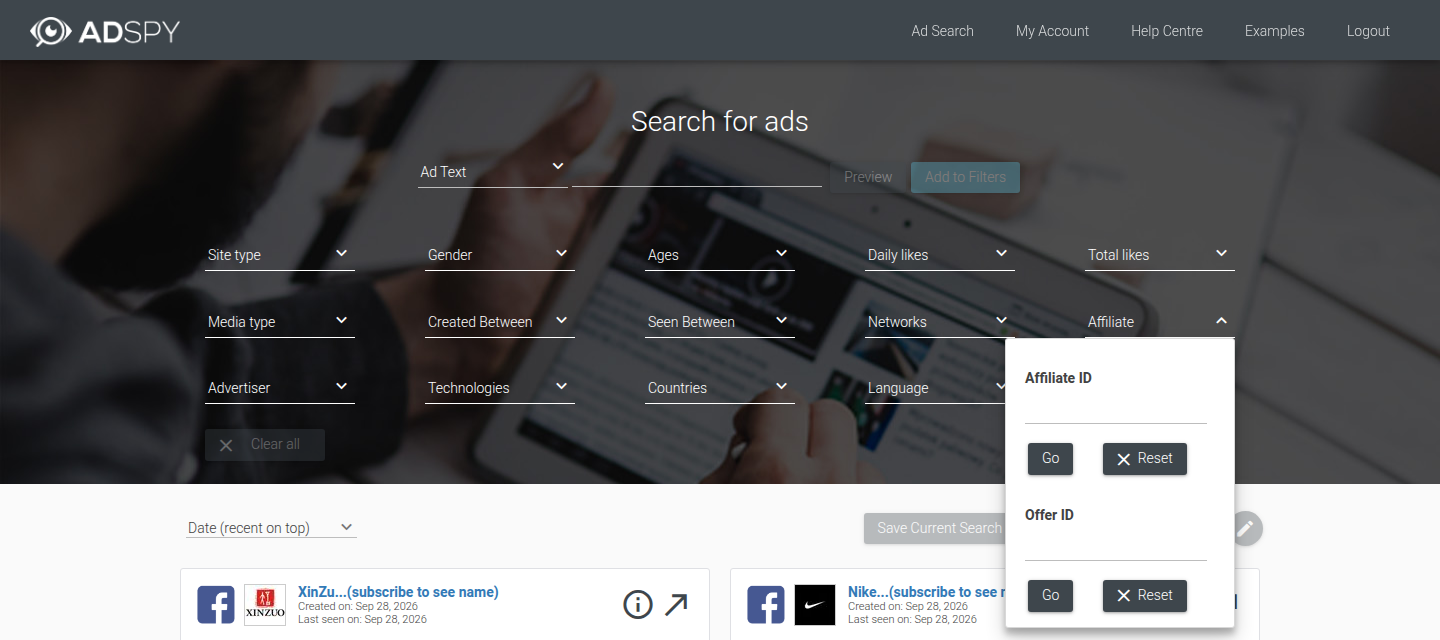
The Affiliate filter works from the other end and takes an Affiliate ID or an Offer ID. On Dropispy's free plan I found no text search of any kind.
For a dropshipper, that's a trade. Dropispy lets you browse store ads by name for free, two months late. AdSpy shows this week's store ads on its welcome views but hides who runs them until you pay $149.
Where a third tool fits
Both tools stop at a single store or a single ad. Spytrend works from the seller's side, and here is how its makers put it, in a single sentence: Spytrend is an ad intelligence platform for Facebook and TikTok advertising: an archive of ads going back to 2018, AI-classified into 33 business categories, with every advertiser assembled into a single card — all ads, pages, domains and countries in one place.
Dropispy ties ads to a landing domain, and AdSpy finds them one query at a time. Spytrend's Webmasters section matches the pixels, Page IDs and domains that ads share, so one seller's stores and pages land on one card.
Starter costs nothing and takes no card, and its archive starts at ads three months old. Fresh ads sit behind the paid plans, and those carry a 14-day money-back guarantee. The pricing page lists what each plan includes.
Take Accustomedi (accustomedi.com), which turned up under the Shops filter in Webmasters. Its card counts 757,413 ads: 77,332 active and 680,081 stopped. They run from 68 Page IDs, 61 of them active, across 10 domains, one still active. The United States, Australia and Canada lead, and the 30-day timeline showed a 54% drop.
The store in the card's name isn't the biggest part of it. bestemall.com carries 605,630 of the ads and accustomedi.com 51,159. applicabley.com, apartmentm.com, resultantp.com, approvalp.com and realisticm.com fill out the top of the list. What ties them into one card is the "What merged this network" list. Pages such as Applicabley, Accustomedi.AU02 and Resultantp.zn11 each ran ads both on their own store and on bestemall.com.
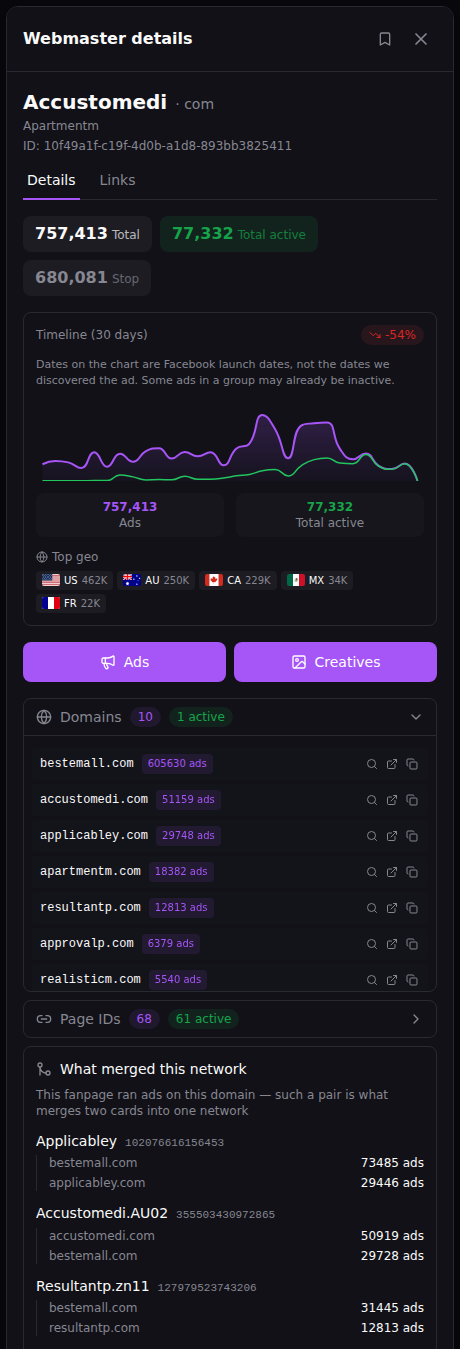
Searched by domain, as Dropispy links its ads, or by advertiser name, as AdSpy does, each of those stores looks like a separate seller. The card shows one operator behind all of them. To find a card like this in your own niche, follow the guide to the Webmasters section step by step.
Both tools still beat Spytrend in places. Spytrend has no search by comments or by affiliate offer, which AdSpy has. Dropispy sells a Shop spy tool on its paid plans. And Dropispy's free feed lags by two months, a month less than Spytrend's Starter.
Matching the tool to the job
On a small budget, with Facebook as the only channel and two-month-old ads good enough, Dropispy's Free plan costs nothing to try. Yearly Premium is worth a look once you know how fast you burn credits.
AdSpy earns its $149 when you need this week's ads, comment search or affiliate offers, and the welcome views let you see that data before paying. When the real question is which seller runs a group of stores, on Facebook or TikTok, Spytrend's Webmasters card is built for that job.
You can repeat my test. Dropispy's Free plan and Spytrend's Starter cost nothing, and a new AdSpy account may come with a credit of ad views. Take one store from your niche, browse its domain in Dropispy, search its product in AdSpy and look the seller up in Spytrend.
Single-tool breakdowns of Dropispy and AdSpy go deeper, and the other pairings cover Minea vs Dropispy and AdSpy vs PowerAdSpy. For store-first research, see the dropshipping tool comparison; for the whole field, the ad-spy tool roundup.
FAQ
AdSpy vs Dropispy: which one costs less to start?
In AdSpy vs Dropispy, Dropispy costs less to start, and its Free plan needs no card. Premium is €14.90 a month on a yearly plan, with 150,000 credits. AdSpy has a single $149 plan, labeled introductory, and no free plan at all. My account there came with a one-time credit of ad views.
AdSpy vs Dropispy for e-commerce ads: whose feed is fresher?
AdSpy vs Dropispy for e-commerce ads splits on freshness. AdSpy showed a Shopify store's ad five days after it was created but hid the store's name. Dropispy's free feed showed the same store's older ads by name and nothing from the last two months.
Is AdSpy worth it for a store on a small budget?
AdSpy is worth it on a small budget only if you need recent Facebook and Instagram ads with the advertiser's name and full text. That's what $149 a month unlocks. Comment and affiliate-offer search come with the tool. Spend the welcome views first, if your account gets them, and see whether your niche shows up.
Dropispy review: what do users and the free plan tell you?
A Dropispy review from users is easy to find on Trustpilot: 2.3 out of 5 from 38 reviews, mostly split between 5 stars and 1 star. The Free plan tells you the rest. No card is asked, but the last two months of ads stay hidden. Paid plans run on credits, and refunds come only in rare cases, within 24 hours of a first purchase.
Is Spytrend the same as AdSpy?
Spytrend isn't the same as AdSpy; they're unrelated products from different companies. AdSpy searches single Facebook and Instagram ads. Spytrend covers Facebook and TikTok and joins the domains, Page IDs and pixels a seller uses into one card. Its Starter plan is free, needs no card and opens ads from three months back and older.